Top 5 Led Solutions Tips for Global Buyers to Consider
The global market for LED solutions is growing steadily, driven by innovative technologies and increasing energy efficiency demands. According to a recent report by Fortune Business Insights, the LED lighting market is expected to reach $125.92 billion by 2027, reflecting a compound annual growth rate (CAGR) of 13.4%. This trend highlights the importance of understanding LED solutions for buyers worldwide.
For global buyers, navigating this evolving landscape requires a careful assessment of various factors. Choices range from cost-effective linear LED lamps to advanced smart lighting systems. Each option presents unique benefits and potential shortcomings. Buyers must evaluate their needs against the expansive array of products available in the market. Not every product is suitable for every environment, and mismatches can lead to inefficiencies.
Prioritizing reliability and manufacturer reputation can enhance purchasing decisions. Looking at warranty offers and customer reviews can be equally revealing. Suppliers with a track record of excellence often garner more trust. Thus, making informed decisions about LED solutions means evaluating both the technical specifications and the overall service provided by manufacturers.

Key Factors to Evaluate When Choosing LED Solutions for Global Markets
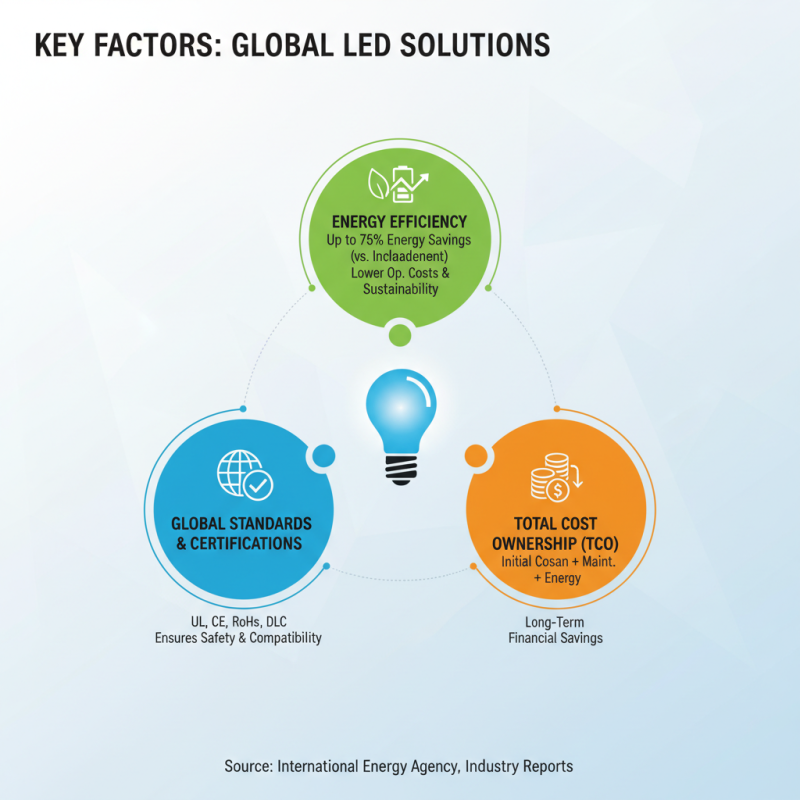
When selecting LED solutions for global markets, buyers must consider several key factors. One essential aspect is energy efficiency. According to the International Energy Agency, LED lighting can save up to 75% more energy than traditional incandescent bulbs. This significant reduction in energy consumption translates to lower operating costs. Furthermore, energy-efficient solutions contribute to sustainability goals, aligning with increasing corporate social responsibility expectations.
Another factor to evaluate is the lifespan of LED products. Many LEDs offer a lifespan of over 25,000 hours, as reported by the U.S. Department of Energy. This longevity reduces replacement frequency and maintenance costs. However, buyers should scrutinize the manufacturer's warranty. A longer warranty often indicates confidence in product quality.
Tip: Always request a detailed specification sheet. This document provides insights into performance metrics, efficiency ratings, and expected lifespans.
Also, assess the quality of light. Color rendering index (CRI) plays a crucial role in how colors appear under different lighting conditions. A CRI value above 80 usually means better color representation. For applications in retail and design, higher CRI values can significantly impact customer experience and perceptions.
Tip: Compare CRI and lumen output across multiple vendors. This benchmarking will help you make informed choices.
In the rapidly changing LED market, continuous learning is vital. Stay updated with industry trends and advancements to adapt your strategy accordingly.
Understanding Different Types of LED Technologies Available to Buyers
LED technology has evolved significantly, offering numerous options for global buyers. Understanding the different types available is crucial. For instance, according to the U.S. Department of Energy, LED lighting is expected to reach 69% of the total market by 2025. This shift indicates a growing reliance on this energy-efficient technology.
When considering LED solutions, think about the application. There are various types of LEDs, such as SMD, COB, and QLED. Each type has unique features that suit specific needs. SMD LEDs, for example, provide bright light and are often used in displays. They are versatile and ideal for both indoor and outdoor applications.
Tip: Choose the right LED for your use case. Factoring in brightness, heat management, and lifespan is essential. A quality LED should last between 25,000 to 50,000 hours. However, not all LEDs meet this standard.
Reflect on energy consumption too. LEDs consume up to 75% less energy compared to incandescent bulbs. Despite this, some buyers overlook the long-term savings. Investing in high-quality LED technology could reduce operational costs significantly.
Tip: Research warranty terms from manufacturers. Many reliable LEDs come with warranties ranging from 3 to 5 years, offering assurance of their longevity. Take the time to compare options carefully. Don’t ignore after-sales support, as it can impact your overall experience with LED solutions.
Top 5 LED Solutions Tips for Global Buyers to Consider
| Type of LED Technology |
Key Benefits |
Typical Applications |
Considerations |
| Standard LED |
Longevity, energy efficiency, low heat emission |
Residential lighting, general purpose |
Brightness variations, color temperature |
| RGB LED |
Color versatility, dynamic lighting options |
Stage lighting, decorative installations |
Higher cost, complexity of control systems |
| High-Intensity LED |
Superior brightness, suitable for outdoor use |
Street lighting, stadiums |
Heat management, installation costs |
| Smart LED |
Remote control, energy monitoring features |
Smart homes, commercial setups |
Dependency on network stability, privacy issues |
| OLED |
Thin design, high color accuracy, flexible displays |
High-end displays, signage |
Durability concerns, production costs |
Assessing Energy Efficiency and Longevity in LED Products
When choosing LED products, energy efficiency and longevity are crucial factors. According to a report by the U.S. Department of Energy, high-quality LED lights use 75% less energy than traditional incandescent bulbs. This impressive efficiency translates into significant cost savings over time. It’s essential for global buyers to consider the lumens per watt ratio, which indicates the amount of light produced per unit of energy consumed. A higher ratio is indicative of better energy efficiency.
Longevity is another key aspect of LED products. Typically, a quality LED can last up to 25,000 hours or more. However, not all products meet this standard. Poorly manufactured LEDs may fail much earlier, leading to unexpected replacement costs. Buyers should carefully evaluate warranty periods and manufacturer claims. Understanding the real-life performance can sometimes be challenging. Real user reviews and third-party testing can offer insights into actual product longevity.
Incorporating energy-efficient and long-lasting solutions is vital. Buyers should assess specifications from credible sources to ensure they are making informed decisions. A focus on these qualities not only benefits the environment but also enhances overall value. It is an ongoing challenge to navigate the many options available in the market.
Exploring Cost-Effectiveness and Return on Investment for LED Installations
When considering LED installations, cost-effectiveness and return on investment are crucial. LEDs consume less energy than traditional lighting, leading to lower electricity bills. For many businesses, this means savings that accumulate over time. It’s important to analyze these savings in relation to initial installation costs. While the upfront investment can seem steep, long-term benefits often outweigh those costs.
One tip for global buyers is to evaluate energy savings. Many businesses see a reduction in energy consumption of up to 80% with LEDs. This statistic can significantly boost your return on investment. Another consideration is maintenance expenses. LEDs have a longer lifespan, reducing the frequency of replacements. This aspect often gets overlooked but can dramatically impact overall costs.
However, not every situation guarantees maximum savings. Certain environments, like those with extreme temperatures, may affect LED performance. Additionally, proper installation is vital. Poorly installed LEDs can lead to inefficiencies and unexpected costs. Understanding your specific context is essential before making a decision. Careful analysis and planning can ensure that your LED investment truly pays off in the long run.