What Are the Best China LED Sheets for Global Buyers?

Choosing the right Led Sheets in China requires more than comparing prices and product photos. Global buyers need dependable performance, clear documentation, and suppliers who understand international projects. A sheet may look bright in a showroom, yet perform poorly inside a narrow sign box or uneven wall.

This guide examines practical factors behind China’s leading Led Sheets. These include LED density, brightness, color consistency, heat management, cutting flexibility, adhesive quality, and power compatibility. Buyers should also check voltage options, waterproof ratings, photometric data, and expected service life. A reliable manufacturer should provide samples, factory details, test reports, and consistent batch control. Certifications such as CE, RoHS, or UL may be relevant, depending on the destination market and installation type.

Details matter.

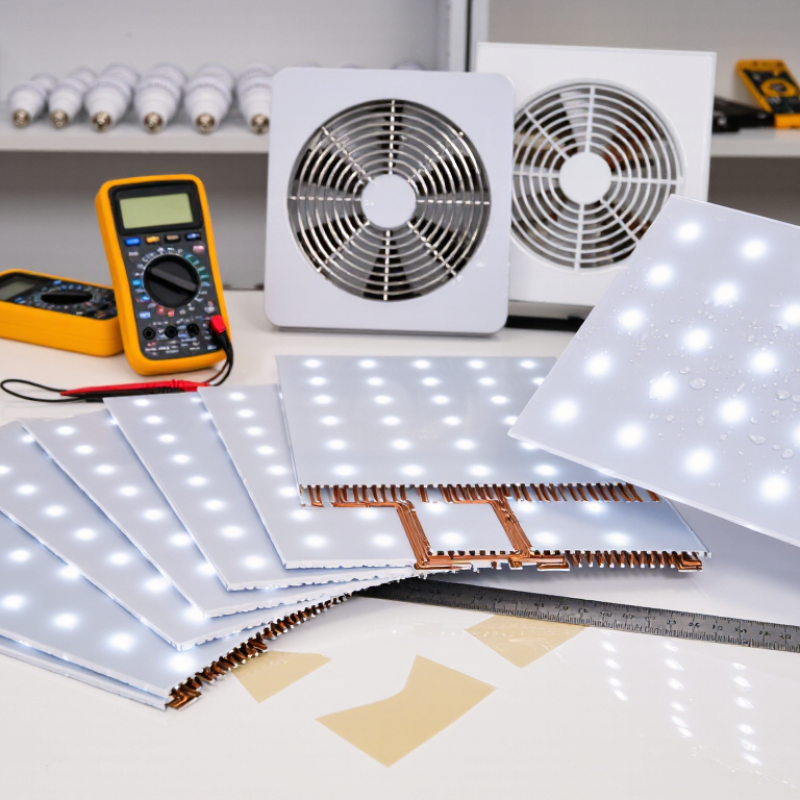
A sample test can reveal dark corners, visible hotspots, weak glue, or excessive heat after several hours. These problems are easy to miss in a polished catalog. However, specifications alone cannot prove long-term reliability. Installation conditions, ventilation, transformer selection, and maintenance also influence results. Supplier communication matters just as much. Slow answers or unclear warranty terms should encourage deeper questions, not immediate rejection. Some suppliers offer strong engineering support but limited customization; others provide flexible designs but less dependable documentation. That trade-off deserves careful review. By comparing verified production capability, technical support, compliance evidence, and real project experience, buyers can select Led Sheets with greater confidence and fewer costly surprises.
What Are the Best China LED Sheets for Global Buyers?

LED Sheet Types and Their Main Applications

China LED sheets serve different lighting jobs, so buyers should classify the sheet before comparing prices. Rigid LED panels provide even light for offices, retail ceilings, and modular signs. Flexible LED sheets bend around columns, curved counters, and exhibition structures. Some use edge lighting, while others use direct-lit layouts. That difference affects brightness, thickness, heat, and installation space. A sample matters more than a polished photograph.

For backlit advertising, thin edge-lit sheets can create smooth illumination behind acrylic faces. They suit menus, shop signs, light boxes, and indoor display panels. Direct-lit sheets usually deliver stronger output for larger cabinets or deeper structures. In kitchens, corridors, and commercial interiors, low-voltage sheets can support soft, continuous lighting. Water-resistant versions may fit humid areas, but buyers must verify the actual protection rating. Outdoor use requires more than a sealed surface. Check connectors, cable insulation, mounting methods, temperature limits, and regional electrical requirements.

Global buyers should request test reports, electrical specifications, photometric data, and production samples. Useful checks include color consistency, flicker performance, heat dissipation, and adhesive durability. A reliable supplier explains limitations, not only advantages. That honesty is valuable. In real installations, a sheet may look bright in a showroom yet appear uneven after fitting. Poor spacing, an unsuitable power supply, or weak diffusion can cause this result. Selection should match the application, mounting surface, local voltage, and maintenance plan. Some projects overbuy brightness and overlook repair access. An avoidable weakness.

What Are the Best China LED Sheets for Global Buyers?

LED Sheet Types and Their Main Applications

The chart compares common LED sheet formats using a practical application suitability score from 1 to 5. Edge-lit panels are widely used for slim signage and retail displays, direct-lit sheets suit larger lightboxes, flexible mesh works well for curved or temporary installations, and transparent LED film is designed for glass windows and other see-through surfaces. Scores are comparative planning indicators; actual performance depends on brightness, pixel pitch, installation depth, environment, and project requirements.

Key Performance Factors for Comparing Chinese LED Sheets

What Are the Best China LED Sheets for Global Buyers?

Key Performance Factors for Comparing Chinese LED Sheets

A practical comparison starts with light output, not product appearance. Check measured brightness in nits, power consumption, and brightness uniformity across the sheet. A higher brightness number is not automatically better. Ask for test conditions, including distance, temperature, and measuring equipment. Color consistency also matters, especially for retail displays and architectural installations. Review color temperature, CRI, viewing angle, and pixel pitch before approving a sample.

Thermal control strongly affects service life. Examine the backing material, heat dissipation design, operating temperature range, and continuous-use test results. Flexible sheets need a stated bending radius and reliable connection points. Inspect the adhesive layer, cable strain relief, and protection rating for the planned environment. An IP rating without clear test documentation deserves caution. It may not reflect real installation conditions.

Electrical safety should be verified through recognized laboratory reports and complete technical files. Confirm input voltage, maximum current, grounding requirements, and electromagnetic compatibility data. Buyers should compare samples from different production batches, not one carefully selected unit. I would also request aging-test records, replacement procedures, packaging details, and written warranty terms. A beautiful sample can hide weak consistency. That is worth questioning. Supplier communication matters too; precise answers usually reveal stronger process control.

What Are the Best China LED Sheets for Global Buyers? - Key Performance Factors for Comparing Chinese LED Sheets

Performance Factor Entry-Level LED Sheet Balanced Commercial LED Sheet High-Performance LED Sheet
Typical Application Indoor advertising, retail displays, decorative installations and short viewing-distance projects. Retail signage, exhibitions, commercial interiors and general indoor or semi-outdoor installations. Large-format outdoor signage, transport displays, architectural façades and demanding rental applications.
Pixel Pitch P3.91–P6.67; suitable when viewers are relatively far from the screen. P2.5–P3.91; a practical balance between image detail, viewing distance and cost. P1.25–P2.5; higher image density for close viewing and fine text or graphics.
Brightness 800–1,500 nits; generally intended for controlled indoor lighting. 1,500–4,500 nits; suitable for bright indoor areas and many semi-outdoor locations. 4,500–8,000+ nits; designed for direct sunlight, provided thermal management is adequate.
Color Temperature Typically 6,500–7,500 K, with limited calibration control. Commonly 3,200–9,000 K with adjustable white balance and improved factory calibration. Approximately 2,800–10,000 K with finer grayscale and color-temperature adjustment.
Refresh Rate 1,920–3,840 Hz; acceptable for standard video and normal camera use. 3,840–7,680 Hz; better for broadcast, event filming and professional content capture. 7,680 Hz or higher; optimized for high-speed cameras and demanding live-production environments.
Brightness Uniformity Typically ≥95% after basic calibration. Typically ≥97%, reducing visible brightness variation between modules. Typically ≥98%, subject to calibration quality, LED binning and operating conditions.
Color Uniformity Basic RGB binning; minor color differences may be visible across modules. Improved LED binning and module calibration for consistent image reproduction. Fine pixel-level calibration and tighter color-bin control for demanding visual applications.
Viewing Angle Approximately 120° horizontal and 120° vertical. Approximately 140° horizontal and 140° vertical, depending on LED package and mask design. Up to approximately 160° horizontal and 160° vertical for wide-audience viewing areas.
Ingress Protection IP30–IP43; normally for dry indoor environments. IP54–IP65; suitable for protected outdoor or semi-outdoor use when correctly installed. IP65 front and rear is commonly specified for fully outdoor installations.
Operating Temperature Approximately 0°C to +40°C for typical indoor operation. Approximately −10°C to +50°C with appropriate ventilation and power protection. Approximately −20°C to +60°C, subject to enclosure design, humidity control and thermal testing.
Humidity Range Approximately 10%–80% relative humidity, non-condensing. Approximately 10%–90% relative humidity, non-condensing. Approximately 10%–95% relative humidity, non-condensing, with suitable conformal protection and enclosure sealing.
Energy Consumption Typical average consumption: 180–350 W/m²; peak values depend on brightness and content. Typical average consumption: 220–450 W/m² with energy-saving control options. Typical average consumption: 300–650 W/m²; high-brightness outdoor operation can require more power.
Power Input Usually 5 V DC modules supplied by an external AC-to-DC power supply. Commonly 5 V DC with protected power distribution and optional redundant power design. Commonly 5 V DC with monitored power distribution, surge protection and optional dual-power redundancy.
Module Weight Approximately 8–15 kg/m², depending on frame, cabinet and support structure. Approximately 10–18 kg/m² for lightweight commercial cabinet or sheet constructions. Approximately 12–25 kg/m², depending on weatherproofing, cabinet material and structural reinforcement.
Expected Service Life Around 50,000–80,000 operating hours to approximately 50% initial brightness, under rated conditions. Around 80,000–100,000 operating hours to approximately 50% initial brightness, with proper thermal management. Up to approximately 100,000 operating hours to approximately 50% initial brightness, subject to LED quality, duty cycle and environment.
Maintenance Design Basic front or rear access; replacement may require more installation time. Modular construction with replaceable receiving cards, power supplies or LED modules. Tool-less or front-serviceable modules, spare-part compatibility and remote fault monitoring.
Control Compatibility Standard sending card and receiving card systems for basic video playback. Common asynchronous or synchronous control systems with multi-format video support. Professional processors, HDR-ready workflows, low-latency options and remote diagnostics.
Compliance Documents to Request Electrical safety declaration, product datasheet and basic factory test report. CE, RoHS, EMC documentation, electrical safety reports and quality-control records where applicable. CE, RoHS, EMC, CB or equivalent reports, IP test results, thermal test data and region-specific certifications.
Best Selection Priority Low initial cost, simple indoor installation and acceptable image performance. Balanced brightness, reliability, maintenance access, energy use and total cost of ownership. Outdoor durability, high refresh rate, precise calibration, serviceability and documented testing.
Comparison note: The figures shown are typical industry ranges for LED sheet and modular LED display solutions manufactured in China. Actual performance varies according to pixel pitch, LED package, driver IC, cabinet design, calibration, installation method and operating environment. Buyers should confirm the final datasheet, test reports, warranty terms and sample performance before placing an order.

How to Evaluate Chinese LED Sheet Manufacturers

For global buyers, the best China LED sheets come from manufacturers with repeatable production, not impressive samples alone. During factory evaluations, inspect the LED layout, diffusion layer, wiring, and adhesive quality. Ask how brightness remains consistent from edge to edge. A reliable supplier should provide clear specifications, test records, and production photographs. Verify electrical ratings, color temperature, lifetime claims, and operating conditions. Ask whether these figures come from internal testing or independent laboratories. The difference matters.

Tips: Request a small trial order before signing a large contract. Measure brightness, power use, heat, color variation, and surface flatness. Test the sheet after continuous operation. Keep written records. A beautiful sample can still hide weak connectors or uneven light.

Manufacturer evaluation should also include quality control and communication. Check whether workers use inspection procedures at incoming, in-process, and final stages. Ask for corrective-action reports when defects appear. Experienced teams usually explain risks directly, including production limits and material shortages. Be cautious when every answer sounds perfect. I have found that honest uncertainty is often more useful than confident promises. Review packaging strength, labeling accuracy, spare-part access, and technical support for your destination market. Confirm compliance documents with qualified professionals, because requirements differ by country and application. A supplier may pass one test yet fail your actual installation conditions. That gap deserves attention.

International Standards, Certifications, and Quality Control

For global buyers, the best China LED sheets are not chosen by brightness alone. Compliance documents matter. The right evidence depends on the destination market and the product’s final use. Buyers should request relevant IEC test reports, CE documentation where applicable, RoHS evidence, and EMC results. For complete luminaires, IEC 60598 requirements may apply. A certified quality system, such as ISO 9001, also indicates controlled production, but it does not replace product testing.

Look beyond the certificate folder. Ask for the test laboratory’s accreditation, report number, sample description, and testing date. Confirm that the tested model matches the shipped LED sheet. In factory inspections, check incoming LED batches, PCB solder joints, adhesive coverage, wire insulation, and diffuser uniformity. Measure color temperature, power consumption, and brightness from several points. Small differences become obvious on a large illuminated sign.

Traceability is essential. Each carton should carry a batch code linked to production records and inspection results. Thermal testing deserves special attention, especially for thin sheets installed in enclosed cabinets. A practical supplier should explain failure limits, replacement procedures, and corrective actions. No process is perfect. I have seen strong-looking reports hide weak sampling or outdated model numbers. That is why an independent pre-shipment inspection remains valuable. It adds cost, but it can reveal loose connectors, uneven light output, or damaged packaging before the goods leave China.

Shipping, Installation, and After-Sales Considerations

What Are the Best China LED Sheets for Global Buyers?

Global buyers should treat shipping as a system, not a freight quote. UNCTAD’s Review of Maritime Transport 2024 reports that over 80% of global trade by volume moves by sea. LED sheets therefore need moisture barriers, corner protection, and shock-resistant crates. Request carton dimensions, gross weight, HS classification, and Incoterms before payment. Ask for photos of the loaded container. Small details matter.

Installation quality often decides performance. Confirm input voltage, control protocol, mounting method, heat clearance, and replacement access. IEC 60598-1 provides a useful safety reference for electrical luminaires. A practical acceptance test should check brightness uniformity, dead pixels, cable polarity, and thermal behavior for several hours. Keep spare modules and power supplies onsite. However, many buyers underestimate local labor costs. The cheapest product may not be the cheapest project.

After-sales support must be measurable. Require a written warranty, response times, troubleshooting videos, and a clear process for damaged parts. The Global E-waste Monitor 2024 recorded 62 million tonnes of electronic waste in 2022, with only 22.3% formally collected and recycled. Modular repair is more responsible than replacing entire assemblies. One uncomfortable lesson remains: a long warranty means little without available parts. Record serial numbers, installation photos, and operating temperatures. Leave room for doubt, too. Site conditions can expose weaknesses that factory tests miss.