
China Top Outdoor Wall Lights Suppliers?
China has a broad lighting manufacturing base, but finding the right Outdoor Wall Lights supplier takes more than comparing catalog photos. Buyers need to assess product quality, production capacity, customization, communication, and delivery consistency. A polished website is a starting point, not proof of dependable manufacturing.
This guide explores how to identify leading Chinese suppliers and compare them using practical criteria. Look closely at housing materials, corrosion protection, light output, color temperature, ingress-protection ratings, and driver options. Ask for current product documents, sample units, and clear explanations of test methods. Where possible, review factory capabilities and quality-control steps rather than relying only on sales claims. Details matter.
Supplier fit depends on the project. A distributor may need ready-to-ship designs, while a hospitality project may require custom finishes and coordinated specifications. Confirm minimum order quantities, lead times, packaging, spare-parts support, and warranty terms before placing an order. Check whether quoted certifications and performance data apply to the exact model being purchased. Not every time.
The companies discussed should be treated as candidates for further review, not automatic recommendations. Product ranges and factory arrangements can change, and even a strong supplier may not suit every market or project. Compare evidence, request written answers, and test samples under realistic conditions. That extra work can reveal small issues, such as uneven finishes or unclear installation instructions, before they become costly problems. A careful shortlist is usually more useful than a long list of names.
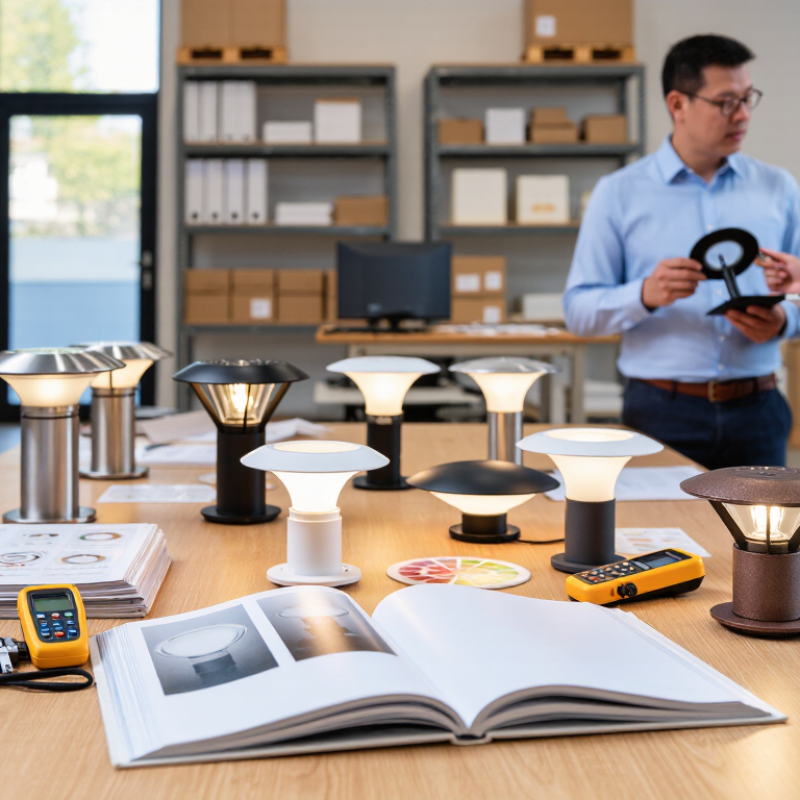
How to Define China’s Top Outdoor Wall-Light Supplier Categories
China’s top outdoor wall-light suppliers are not one uniform group. The useful question is which supplier category fits the project. Direct manufacturers manage production and can adjust housing dimensions, finishes, or mounting details. They suit repeat orders, but buyers should check whether the factory makes complete fixtures or only assembles components.
OEM and ODM suppliers offer different levels of customization. An OEM supplier builds to a buyer’s specifications; an ODM supplier may adapt an existing design. Ask for drawings, material details, and a working sample. Small details matter: a poorly sealed cable entry can let moisture reach the wiring. Not glamorous, but important.
Export-oriented trading suppliers may coordinate several factories and simplify communication. Confirm who handles quality checks and replacement parts. Project-focused suppliers often support lighting schedules, photometric files, and coordinated batches for hotels, gardens, or building exteriors.
Category labels alone prove little. Request test reports that match the exact model, and check ingress protection, finish durability, and operating temperature. Review sample consistency under daylight and after installation; a catalog image cannot show glare on a wet wall. Compare lead times and packaging details, too. One limitation: a sample can be excellent while bulk production varies. Ask how inspections are recorded, then judge the evidence against your site conditions, order size, and service needs.
Which Chinese Suppliers Meet IEC 60529 IP65 Protection Requirements?
China Top Outdoor Wall Lights Suppliers?
Which Chinese Suppliers Meet IEC 60529 IP65 Protection Requirements?
For outdoor wall lights, an IP65 claim should be tied to the exact model, not just a supplier’s catalogue. Under IEC 60529, IP65 indicates dust-tight protection and resistance to water jets from any direction under specified test conditions. It does not mean the fitting can be submerged. Details matter. Ask suppliers for a test report that identifies the tested model and enclosure configuration. Check whether cable glands, seals, and mounting joints match the finished product. A small change to the housing can affect protection.
A dependable supplier should explain how it controls assembly and checks products during production. Request clear photos of seals and cable entries, plus a sample for inspection. Look for consistent gasket placement, tight-fitting covers, and clean joins around the body. A report is useful, but it is not the whole story. I would still inspect a production sample; paperwork can lag behind a revised housing. Also consider corrosion resistance and UV exposure, which IP65 alone does not establish.
Tips: Ask for the report before ordering, then confirm its model number matches the quotation and sample. Keep copies of test documents and agreed specifications. If answers are vague, pause and verify.
How LM-80’s 6,000-Hour Testing Helps Assess LED Component Reliability
Outdoor wall lights endure long nights, trapped heat, rain, and repeated switching. LM-80 testing helps buyers assess one important part: the LED light source. Over at least 6,000 hours, a report tracks lumen maintenance and color shift under stated operating conditions. The test uses controlled temperatures and drive currents. Useful evidence. Not a promise.
When comparing suppliers, check that the report matches the LED package or module used in the proposed fixture. Look for the tested current, temperature points, and measurement intervals. A result from a cooler test condition may not reflect a tightly sealed wall light that runs hot after dusk. Small details matter.
LM-80 does not test the complete fixture, its driver, seals, or resistance to water. Nor does 6,000 hours prove a specific service life. Ask how the supplier uses the data, and whether any lifetime projection follows an accepted method such as TM-21. A careful review may still leave questions; that is better than treating a test sheet as a guarantee. Check thermal design and fixture-level testing separately.
How to Compare Supplier Specs: Lumens, Watts, CCT, and CRI
China Top Outdoor Wall Lights Suppliers?
How to Compare Supplier Specs: Lumens, Watts, CCT, and CRI
When comparing outdoor wall light suppliers, check what each specification actually describes. Lumens indicate the light output; watts show power consumption. A higher wattage does not automatically mean a brighter fitting. Compare lumens and watts together, then consider the beam angle and mounting height. A 900-lumen light may work well beside a doorway but feel harsh on a narrow patio. Numbers can mislead.
CCT describes the light’s appearance, usually from warm white to cool white. For a welcoming entrance, many buyers prefer a warmer tone; a cooler option may suit a crisp, contemporary exterior. CRI shows how naturally colors appear under the light. A higher CRI can help door colors and landscaping look more accurate, though it does not guarantee pleasing light by itself. Ask suppliers to provide test data, not just a catalog figure, and compare identical measurement conditions. A sample can reveal glare or color differences that a table misses.
Tips: Request lumen, wattage, CCT, and CRI values for the exact model being quoted. Confirm whether output is measured at the LED or the finished fixture. Also check the beam pattern against your wall and installation height. Specs help narrow the choices, but they do not replace a real-world trial; that part is easy to overlook.
How to Verify Factory Quality, Certifications, and Warranty Terms
China Top Outdoor Wall Lights Suppliers: How to Verify Factory Quality, Certifications, and Warranty Terms
A supplier’s certificate folder is only a starting point. Ask for reports tied to the exact fixture model, not a similar product. Check the issuing laboratory, report date, factory address, and certification scope. For outdoor lights, request evidence of safety testing under IEC 60598-1 and water and dust protection testing under IEC 60529. Confirm the stated IP rating matches the product label and construction. Paper is not proof.
Inspect the production process, too. Request records for incoming aluminum, wiring, coatings, and sealed gaskets. Ask how the factory checks water ingress, electrical safety, and performance after temperature changes. DOE Energy Saver guidance says LEDs use at least 75% less energy and can last up to 25 times longer than incandescent lighting. That is an industry benchmark, not a guarantee for any specific wall light. Ask for photometric and lifetime test data for the exact model.
Read the warranty line by line. Confirm its term, covered components, labor or shipping costs, exclusions, and claim response time. Get replacement procedures in writing. One weak spot in many checks is relying on a sample alone; production batches can differ. Request recent inspection records and, where practical, arrange an independent pre-shipment inspection. Details matter.
China Top Outdoor Wall Lights Suppliers? - How to Verify Factory Quality, Certifications, and Warranty Terms
| Verification Area | Evidence to Request | How to Verify | Practical Acceptance Check | Warning Sign |
|---|---|---|---|---|
| Factory capability | Current production-floor photos or a live video tour; process flow; equipment list; sample production records. | Check that the site can demonstrate the processes relevant to the product, such as assembly, wiring, inspection, and packing. Confirm the facility address against business and audit documents. | The supplier can clearly explain which operations are performed in-house and which are subcontracted. | Only catalog images are provided, or the production location and subcontracting arrangements remain unclear. |
| Product specifications | Datasheet and approved drawings covering dimensions, materials, input voltage, wattage, light output, color temperature, and installation method. | Compare the datasheet with the quotation, sample, product label, and final purchase specification. Record any approved substitutions in writing. | All documents identify the same model and configuration; critical materials and electrical ratings are specified. | Specifications change between documents or rely on vague descriptions such as “high quality.” |
| Ingress protection | IP-rating test report for the relevant luminaire configuration, including the tested model and test method. | Check that the report refers to the offered model and enclosure design. IEC 60529 defines the IP code system; an IP claim alone does not prove every installation is weatherproof. | The rating is supported by a traceable report, and installation instructions identify any required seals, orientation, or mounting conditions. | An IP rating appears only in marketing material, with no matching test evidence. |
| Electrical safety and market compliance | Applicable declarations, certificates, and safety test reports for the destination market and exact product configuration. | Confirm the standards and regulatory route with the importer or a qualified compliance professional. For example, CE applies to relevant EU legislation; UKCA relates to applicable Great Britain requirements; UL or ETL marks may be relevant to North American listings. | The documents identify the product or model, responsible party, applicable standards, and scope. Check certificate status with the issuing organization where possible. | A generic logo or unrelated certificate is presented as proof for every market or model. |
| Materials and corrosion resistance | Bill of materials, coating or finish specification, material certificates where applicable, and any corrosion-test report relevant to the intended environment. | Compare stated housing, fastener, gasket, and finish materials with the approved sample. Ask whether the test method and duration suit the intended use; salt-spray results do not by themselves predict service life in every environment. | Materials and finish are defined in the purchase specification, including any coastal or high-humidity requirements. | The supplier promises “rust-proof” performance without identifying materials or supporting evidence. |
| LED and driver quality | LED and driver specifications, component supplier details, electrical performance data, and applicable safety or reliability reports. | Check that the tested driver and LED configuration match the offered product. Request written change-control notice for component substitutions. | Key component ratings, operating conditions, and replacement or service arrangements are documented. | Component brands or specifications are promised verbally but excluded from the order documents. |
| Quality control and inspection | Incoming, in-process, and final inspection checklists; sample inspection records; defect-handling procedure; batch traceability information. | Agree inspection criteria before production. Use an independent pre-shipment inspection when order value or risk warrants it; define sampling and acceptance limits in writing. | Inspection results can be linked to the production batch, and defects have a documented correction process. | “100% tested” is claimed without test records or a defined test procedure. |
| Certification scope and validity | Complete certificate or declaration, report number, issuer details, model list, and scope or validity information where applicable. | Contact the issuer or use its official verification service when available. Confirm that the factory, model, components, and intended market fall within the document’s scope. | The evidence is current where validity periods apply and corresponds to the exact product being purchased. | A certificate belongs to a different model, company, or product category. |
| Warranty terms | Written warranty showing duration, start date, covered parts, exclusions, claim process, remedy, shipping costs, and response timeline. | Make sure the warranty is incorporated into the purchase agreement and states how claims are handled for products installed outdoors and operated within specified conditions. | Coverage and remedy are clear, including whether repair, replacement, credit, or spare parts are provided and who pays related freight. | Only a verbal warranty is offered, or exclusions can be changed at the supplier’s discretion. |
| Samples and production consistency | Pre-production sample, signed or photographed sample approval, and a written process for approving design or component changes. | Keep an approved reference sample and compare production units against agreed dimensions, finish, wiring, labels, and accessories. | The order specifies that production must match the approved sample and documents any permitted variations. | The supplier refuses to confirm the sample configuration or permits unapproved substitutions. |
| Packaging and shipment protection | Packaging specification, carton markings, packing photos, and drop or transit-test evidence if required by the buyer or shipping plan. | Review packaging against the product’s weight, glass or lens components, and transport route. Confirm packaging requirements before mass production. | The packing method and carton quantities are included in the order documents and suitable for the agreed logistics conditions. | Packaging is excluded from the quotation or cannot be confirmed before shipment. |
Note: Certification, labeling, and testing requirements depend on the destination market, product design, and intended installation. Verify applicable requirements before placing an order.
