Top 10 Cable Track Solutions for Efficient Transportation?
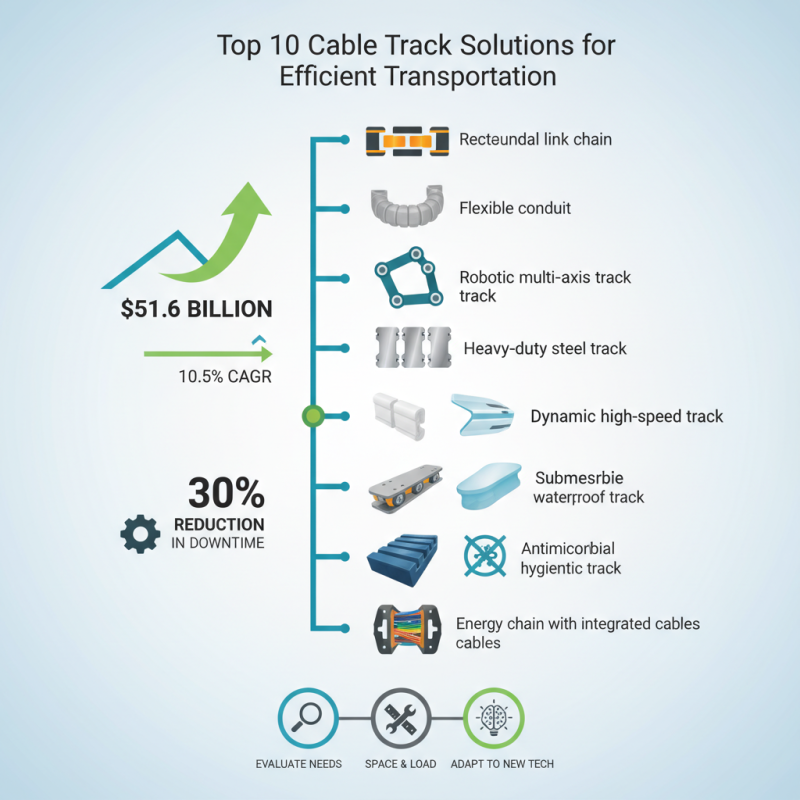
In today's industrial landscape, the efficient transportation of materials is crucial. The use of Cable Track systems has emerged as a leading solution for managing and guiding cables and hoses in various environments. According to a report by MarketsandMarkets, the global cable management market is projected to reach $51.6 billion by 2025, growing at a compound annual growth rate (CAGR) of 10.5%. This impressive growth emphasizes the significance of robust solutions like Cable Tracks.
Cable Tracks are designed to enhance operational efficiency while minimizing wear and tear on cables. They reduce the risk of damage and ensure that machinery operates smoothly. In fact, a study by Research and Markets indicates that businesses implementing effective cable management solutions can achieve a 30% reduction in downtime. However, not all Cable Track systems are created equal. Some may fail to accommodate specific environments or loads effectively, leading to potential issues.
Choosing the right Cable Track involves careful consideration of various factors. Businesses must evaluate their unique needs, space constraints, and load requirements. A well-selected system can contribute significantly to productivity and safety. Nevertheless, it is essential for companies to regularly reassess their solutions and remain adaptable to new technologies. This reflection ensures long-term success and reliability in cable management strategies.
Top 10 Cable Track Solutions: Overview of Transportation Efficiency
In today’s fast-paced industry, efficient transportation solutions are crucial. Cable tracks, also known as cable carriers or drag chains, play a vital role in this sector. They help manage the intricate paths of cables and hoses. According to recent industry reports, a well-implemented cable track system can improve operational efficiency by up to 30%. This translates to significant cost savings over time.
When selecting cable track solutions, consider factors such as load capacity, speed, and environmental conditions. For instance, a lightweight cable track provides ease of movement, while durable materials can withstand harsh environments. Data shows that improper cable management can lead to downtime, affecting productivity. Aim to minimize these risks with the right system.
Tip: Regularly maintain and inspect your cable tracks. Frayed cables can hinder flow and lead to costly delays.
Another consideration is flexibility. A flexible cable track can adapt to various machinery layouts, enhancing spatial efficiency. However, an overly complicated system might confuse operators, leading to mistakes. Balancing simplicity with functionality is key to ensuring an efficient operation.
Tip: Involve your team in the selection process. Their insights can help identify practical solutions tailored to daily operations.
Understanding Cable Track Systems: Types and Applications in Industry
Cable track systems play a vital role in various industries. These systems provide efficient transportation for cables, hoses, and other flexible connections. A study by the International Association of Robotics indicates that robotic operations use these systems to enhance productivity, reducing the risk of downtime by up to 30%. As automation grows, the need for robust cable management becomes increasingly crucial.
There are several types of cable track systems, including festoon systems and Energy Chains. Festoon systems are ideal for applications where long travel distances are needed. Energy chains, loved for their flexibility, are commonly used in automated machinery. According to industry reports, energy chains can improve maintenance intervals by approximately 25%. Still, choosing the right system can be challenging, as each application has its unique demands.
Tips: Always consider load capacity when selecting a cable track system. Regular inspections are crucial to ensure longevity. A poorly maintained system can lead to failures, causing costly downtime. In many cases, companies underestimate maintenance needs, leading to unplanned repairs and productivity loss. The investment in high-quality solutions is often a wise choice, despite initial costs.
Key Benefits of Using Cable Tracks for Material Handling Efficiency
Cable tracks are essential for efficient material handling in various industries. They provide organized pathways for cables and hoses, preventing tangles and wear. This design enhances workplace safety and reduces downtime. When systems are organized, workers can focus on their tasks without distraction.
Utilizing cable tracks also leads to improved mobility. Machines can move freely along their tracks, which increases productivity. Workers appreciate the reduction in physical strain when cables are not trailing on the floor. However, implementing these solutions may require initial investment and planning. Companies must assess their specific needs thoroughly.
Moreover, regular maintenance is crucial for prolonged performance. Tracks need inspection to identify wear and potential hazards. Sometimes, teams overlook this process, leading to inefficiencies down the line. By prioritizing both innovation and upkeep, businesses can achieve seamless operations while ensuring employee safety.
Statistical Insights: Cable Track Usage Trends and Market Growth Data
Cable tracks have become essential in modern transportation systems. Recent statistical insights show a steady increase in their usage across various industries. This rise can be attributed to the growing demand for efficient, organized, and safe transport of power and data cables. Reports indicate a significant market growth, particularly in manufacturing and automation sectors.
In 2023, the cable track market showcased a remarkable 15% annual growth rate. Notably, industries are investing more in cable management solutions. This trend reflects a broader emphasis on efficiency. Issues related to cable clutter persist, causing hazards on factory floors. Efficient designs are needed to counteract such challenges. Companies are increasingly focusing on ergonomics, safety, and space optimization.
Interestingly, while cable tracks offer numerous benefits, challenges remain. Businesses often struggle to adapt to the latest technologies. Some still rely on outdated systems, which hampers overall efficiency. Market data suggests a need for ongoing education on new solutions. Improving awareness can enhance the adoption rate of cable track systems. Stakeholders must recognize these gaps and address them proactively.
Evaluating Performance: Comparing Top Cable Track Solutions on Cost and ROI
When evaluating cable track solutions, performance metrics like cost and ROI are vital. These factors can influence operational efficiency. Companies must assess how materials and designs affect long-term expenses. Often, cheaper options seem attractive initially but lead to higher maintenance costs later.
The best choices balance upfront investments with durability. A system that fails frequently incurs hidden costs. Look for tracks that minimize wear on cables and reduce downtime. A deeper analysis of working conditions can reveal unexpected expenses. Understanding where inefficiencies lie promotes smarter investments in quality solutions.
In discussions on cable tracks, subjective opinions often surface. Some users prefer lighter materials, while others prioritize strength. Testing various solutions under real-world conditions can provide clarity. Gathering data from these trials can guide future purchases. An informed decision can pave the way for more effective transportation.
Conclusion
The article provides a comprehensive overview of the top ten cable track solutions that enhance transportation efficiency across various industries. It begins with an exploration of different types of cable track systems and their applications, emphasizing how these systems contribute to more effective material handling processes. By highlighting the key benefits, the article showcases how cable tracks can significantly improve operational efficiency and reduce costs.
Additionally, the article presents statistical insights into cable track usage trends and the growing market demand for such systems. A performance evaluation compares the leading cable track solutions based on cost and return on investment (ROI). Looking ahead, the article discusses future innovations and emerging technologies that are set to further transform cable track transportation solutions, ensuring that industries can adapt and thrive in a rapidly evolving landscape.
