
What Is LED Custom Lighting for Global Buyers?
For global buyers, Led Custom lighting means designing LED products around a project’s exact space, brand, and performance needs. It may include tailored dimensions, beam angles, color temperatures, finishes, controls, and packaging. A hotel corridor may need warm 2700K light, while a warehouse aisle may require stronger 5000K illumination. The product should fit the application, not merely look attractive in a catalog.
Reliable sourcing depends on more than a low quotation. Experienced buyers usually review LED efficiency, color consistency, heat management, driver quality, ingress protection, and expected service life. They also request samples before approving mass production. A reputable manufacturer should provide clear technical drawings, test reports, installation guidance, and traceable quality records. Certification requirements can differ between markets, so buyers must verify current local standards with qualified professionals. Small details matter. A loose connector or unclear wiring diagram can delay an entire installation.
Every custom project has compromises. No specification sheet is perfect. A thinner housing may reduce cooling space, while a higher brightness target can increase energy use. Good suppliers explain these trade-offs instead of promising everything at the lowest price. Clear communication, realistic lead times, secure packaging, and responsive after-sales support help reduce cross-border risks. Buyers should compare samples, factory capabilities, warranty terms, and documented performance before making a decision. The best solution is not always the most sophisticated one. It is the one that performs consistently, ships safely, and remains practical for the people who will install and use it.
Definition and Core Features of LED Custom Lighting
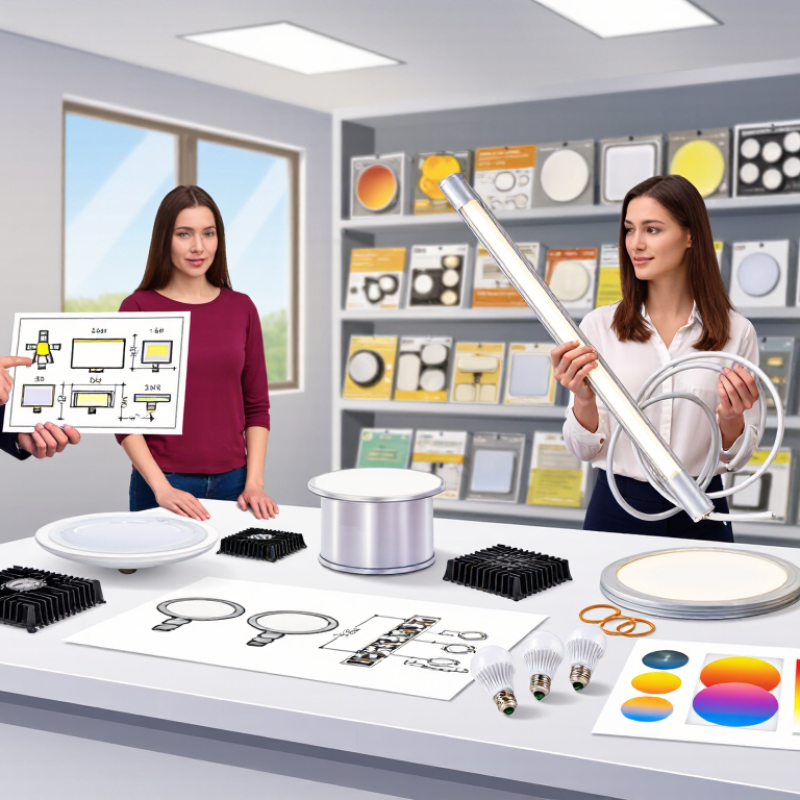
LED custom lighting is a lighting solution designed around a buyer’s specific space, purpose, and performance requirements. It may include tailored shapes, colors, beam angles, power levels, controls, and installation methods. Unlike standard fixtures, custom products begin with a project brief. A warehouse may need wide, uniform light, while a hotel lobby may require softer layers and precise visual accents.
Core features include adjustable color temperature, dimming capability, optical control, and efficient heat management. Good thermal design protects LED performance when fixtures operate for long hours. Reliable suppliers should explain lumen output, color rendering, rated life, driver details, and testing conditions clearly. These figures matter more than attractive product images. A bright fixture is not automatically a useful fixture.
Global buyers should also check voltage compatibility, packaging strength, installation instructions, and documentation for local requirements. Certifications and safety marks must match the destination market, not merely appear on a quotation. In practical projects, small details can create large delays. Connector types, mounting holes, and cable lengths are easy to overlook. They should be confirmed before production.
Customization can improve function, but it can also increase cost and lead time. That trade-off deserves honest discussion. A sample test under real room conditions is often wiser than trusting a digital rendering. Even experienced buyers can miss glare, shadows, or unexpected color differences. Careful feedback at this stage may prevent expensive changes later.
How LED Custom Lighting Is Designed and Configured
What Is LED Custom Lighting for Global Buyers?
How LED Custom Lighting Is Designed and Configured
LED custom lighting begins with the space, not the fixture. Designers review ceiling height, room size, work tasks, viewing angles, and local climate. A warehouse may need wide, uniform beams. A hotel lobby may require softer layers and controlled glare.
The process usually starts with a lighting brief and a site survey. Engineers calculate illuminance, beam angles, color temperature, and color rendering. They also check heat dissipation, power supply limits, and installation access. Small details matter. A beautiful housing can still fail when ventilation is poor.
Configuration includes dimming methods, control interfaces, emergency functions, and mounting options. Buyers should confirm voltage, frequency, ingress protection, testing documents, and regional safety requirements. Photometric files help compare performance before production. A prototype can reveal unwanted shadows or uncomfortable brightness. It may also expose a design mistake. That is useful, not embarrassing.
Experienced suppliers normally test samples under realistic conditions. They inspect LED consistency, driver stability, surface finish, and thermal behavior. Custom dimensions should match packaging and installation tools. Otherwise, shipping damage or difficult assembly can erase the value of customization. Color may also shift between batches, so written tolerances and sample approval are essential. Even careful plans need adjustment after the first installation.
Key Applications for Global Buyers
What Is LED Custom Lighting for Global Buyers?
Key Applications for Global Buyers
LED custom lighting supports different project needs, from retail displays to large industrial spaces. In shops, tailored beam angles can highlight shelves without creating harsh reflections on glass. In hotels and restaurants, adjustable color temperature helps create warmer evening settings and clearer daytime areas. Office projects often require low-glare optics, stable brightness, and compatibility with building control systems.
Outdoor applications need more than attractive housing. Buyers should review ingress protection, operating temperatures, cable quality, and drainage design. Architectural façades may use narrow beams to outline columns, while warehouses usually need wide distribution and reliable thermal performance. Custom signs, exhibitions, and temporary installations also benefit from lightweight fixtures and simple maintenance access. However, a lower unit price can hide higher replacement costs. This detail is often underestimated.
Tips: Ask for photometric files, material specifications, sample testing, and production tolerances. Confirm input voltage, color consistency, dimming methods, and local electrical requirements before ordering. A small sample room can reveal glare, shadows, or color shifts that drawings miss. Keep spare drivers and connectors available for remote projects. Not every custom feature adds value. Sometimes, simpler construction performs better. Global buyers should document acceptance standards clearly, including brightness, color quality, packaging, and inspection points. This creates a more reliable purchasing process across languages, climates, and installation teams.
Materials, Performance Standards, and Quality Assessment
What Is LED Custom Lighting for Global Buyers?
Custom LED lighting begins with material choices, not appearance. Aluminum housings should transfer heat efficiently, while copper traces need stable conductivity. Polycarbonate lenses resist impact better than ordinary acrylic in demanding spaces. Silicone gaskets help protect against moisture, but poor fitting can still cause failure. Heat matters. A sleek sample proves little without material records and production controls.
Performance standards should match the installation environment. Check lumen output, color temperature, color rendering, power factor, and flicker data. For outdoor products, review the IP rating and corrosion resistance. IEC 60598 testing can support electrical safety claims, while LM-80 and TM-21 data help assess LED lifetime. Ask for evidence. A claimed 50,000-hour life may depend on a cool laboratory, not a hot ceiling.
Quality assessment needs both documents and physical inspection. I recommend testing production samples, not only approval samples. Measure light output with calibrated equipment, inspect solder joints, and run thermal tests under continuous operation. Check cable glands, screw alignment, lens uniformity, and dimming response. Small gaps matter. In one inspection, a bright fixture concealed weak strain relief. The design looked professional, but the connection needed rework. No assessment is perfect, especially when factory batches change. Buyers should record test conditions, tolerances, and corrective actions before approving bulk production.
Ordering, Manufacturing, and International Delivery Considerations
What Is LED Custom Lighting for Global Buyers?
Custom LED lighting means more than choosing a shape and color. Global buyers must define brightness, color temperature, CRI, beam angle, voltage, dimming, and IP protection. A clear specification reduces costly revisions. Request drawings, photometric files, wiring diagrams, and a working sample before approving production. Ask how heat is managed inside the fixture. Poor thermal design can shorten LED life, even when the sample looks impressive.
Tips: Confirm the destination voltage and plug format. Check whether the driver supports local dimming systems. Request a pre-shipment inspection with photos, test records, carton measurements, and quantity verification. Use agreed trade terms, but read every responsibility carefully. I have seen buyers assume delivery includes customs clearance. It often does not. That mistake can delay installation and increase storage charges.
Manufacturing should include material confirmation, color consistency checks, assembly testing, and aging tests. Keep one approved sample as the reference unit. Small changes in aluminum finish or diffuser thickness can alter light output. International delivery also needs strong packaging, readable labels, commercial invoices, packing lists, and accurate product descriptions. Confirm lead times for components, not only final assembly. Sea freight may reduce cost, while air freight can protect a tight project schedule. However, freight estimates change quickly. Build a reasonable buffer. Perfection is unlikely in global sourcing, so document decisions and inspect critical details before payment and dispatch.
LED Custom Lighting: Typical International Order Timeline
The chart shows practical planning estimates in business days for a standard custom LED lighting order, from design confirmation to final delivery. Actual timing may vary with product complexity, order quantity, factory capacity, shipping mode, customs clearance, and destination regulations.
Related Posts
-
The Future of Lighting How Led Custom Solutions Are Shaping Eco Friendly Smart Homes
-
Top LED Custom Light Manufacturers for Global Buyers
-

A Comprehensive Comparison of Best Custom Led Panels for Every Need
-

10 Tips for Choosing the Best Light Panels?
-

China's Resilient Manufacturing Growth in the Face of US China Tariffs with Led Custom Light Solutions
-
The Ultimate Guide to Choosing the Best Light Panels for Your Space
