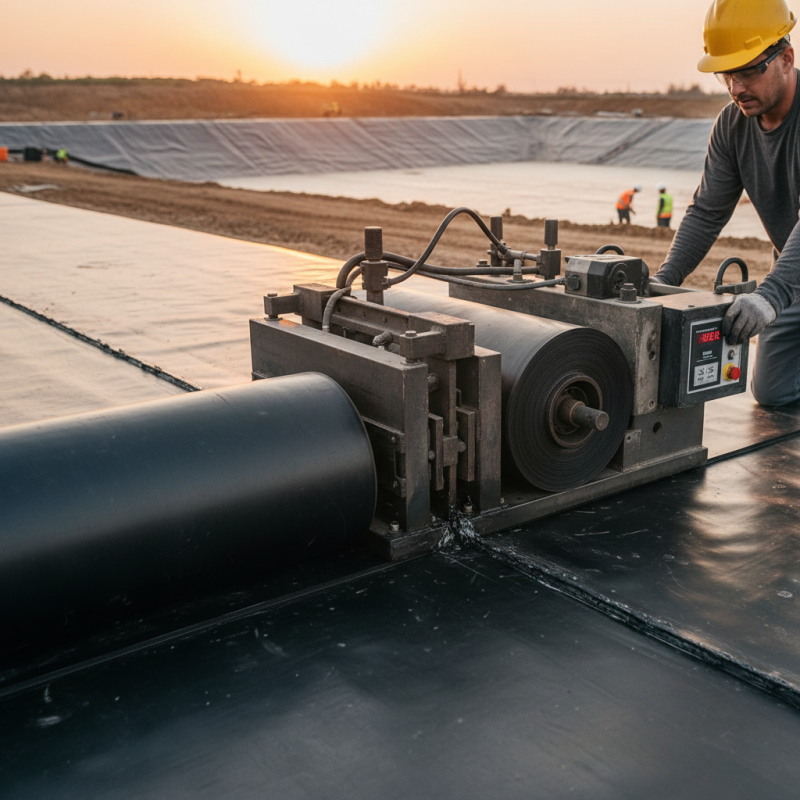
What is a geomembrane welding machine and how does it work?
A geomembrane welding machine is a specialized tool used in the construction industry. It plays a crucial role in joining geomembranes, which are synthetic liners often used for containment purposes. These machines utilize heat and pressure to create strong, durable seams.
Understanding how a geomembrane welding machine works is essential for effective application. The machine heats the geomembranes, allowing them to bond securely. Operators must pay attention to temperature and timing during this process. Poor technique can result in weak seams, leading to project failures.
While these machines are essential, they require skilled operators. Misalignment or inadequate heating can lead to problems. Investing in quality equipment and training is vital for success. Overall, a geomembrane welding machine is a powerful asset in ensuring the integrity of containment projects.
What is a Geomembrane Welding Machine?
A geomembrane welding machine is essential for various construction projects. This equipment is specifically designed to join geomembranes, which are synthetic liners made to provide impermeable barriers. These barriers are critical in applications like landfills, reservoirs, and aquaculture. The machine uses heat to fuse the edges of geomembranes together, ensuring a strong seal to prevent leaks.
Operating a geomembrane welding machine involves a few steps. First, the machine heats the surfaces that will be joined. This heating can be accomplished through hot air, hot wedge, or extrusion welding methods. Once the material reaches the right temperature, the two pieces are pressed together. The cooling process is just as important; improper cooling can weaken the bond. Users must be cautious during setup and operation to achieve a durable connection.
Despite its importance, challenges often arise. For instance, inconsistent temperatures can lead to poor welds. Also, environmental factors like wind can affect the operation. It's crucial to monitor these variables closely. Achieving a perfect weld requires attention to detail and practice. Overall, understanding the intricacies of a geomembrane welding machine is vital for successful project outcomes.
Key Components of a Geomembrane Welding Machine
A geomembrane welding machine is essential in creating waterproof barriers. Its main function is to join geomembrane sheets, often used in landfills and ponds. The welding process ensures there are no leaks, protecting the environment.
Key components of a geomembrane welding machine include the heating element, the pressure roller, and the electrode. The heating element melts the edges of the geomembranes. This melting allows the two sheets to fuse together seamlessly. The pressure roller then applies consistent pressure to ensure a solid bond. However, the settings must be precise. Too much heat can damage the material.
Another critical part is the control panel, which manages the entire welding process. Operators must understand it well. Adjusting temperature and speed is vital for the best results. Sometimes, inexperienced users overlook these adjustments, leading to poor welds. Regular maintenance of these components is necessary to avoid unexpected failures during a project.
What is a geomembrane welding machine and how does it work? - Key Components of a Geomembrane Welding Machine
| Component | Description | Function |
| Heating Element | A device that generates heat to soften the geomembrane material. | Facilitates the welding process by melting the edges of the geomembrane. |
| Control Panel | Interface for operators to set parameters like temperature and speed. | Allows for precise control over the welding process for optimal results. |
| Welding Roller | A component that applies pressure to the weld area after heating. | Ensures a strong bond by pressing the melted edges together. |
| Power Supply | Source of energy that powers the heating element and controls. | Provides necessary energy for the functioning of the machine. |
| Extrusion Gun | Tool used to add material to the weld for reinforcement. | Fills gaps and strengthens the weld seam. |
Principles of Operation for Geomembrane Welding
Geomembrane welding machines are essential tools in construction and environmental protection. They create sealed barriers to prevent fluid leakage. The technology behind these machines is based on the principles of heat generation and pressure application. According to reports, these machines can operate at temperatures ranging from 300°F to 600°F, efficiently fusing materials together.
Effective welding relies heavily on the machine's control systems. Many units incorporate automatic monitoring to ensure consistent temperature and pressure. This can enhance seam integrity significantly. However, it's worth noting that improper settings can result in weak joints. Some studies highlight that nearly 26% of joints fail due to inadequate welding parameters.
In applications like landfill construction and water containment, seams must be strong. Even slight variations can lead to costly failures. The industry standard requires a minimal overlap of 12 inches for effective sealing. Yet, some operators overlook such details. Mistakes are costly. Continuous training and adherence to guidelines are crucial for success.
Types of Welding Techniques Used in Geomembranes
Geomembranes are essential in many engineering projects. Welding them requires specific techniques to ensure durability and functionality. Different welding methods achieve various results and can be suited for specific applications.
One common technique is hot air welding. This method uses a heated air stream to melt the geomembrane edges. It is often quick and effective, yet it needs precision. If not done correctly, the seams can be weak.
Another method is extrusion welding. This involves an extruder feeding molten plastic into the seam. The molten plastic bonds the edges tightly together. While it offers strong seams, it requires careful setup.
Radio Frequency (RF) welding is also an option. RF welding uses electromagnetic energy to create molecular bonds. It can be very effective, especially in thicker materials, but it also has a learning curve.
Understandably, each method has its pros and cons. Choosing the right technique can sometimes feel overwhelming. A wrong choice could lead to project delays. Balancing efficiency and effectiveness is key to success in geomembrane welding.
Applications of Geomembrane Welding in Various Industries
Geomembrane welding machines play a significant role in various industries. In construction, they are crucial for creating barriers against water and contaminants. These machines weld geomembranes, which are often used in landfills, reservoirs, and containment systems. The result is a seamless, durable membrane that protects the environment.
In the mining industry, geomembrane welding is vital. It prevents leachate from contaminating groundwater. The use of welding machines ensures these protective layers are securely attached. This is critical for maintaining safety and compliance with environmental regulations.
Tips: Ensure your welding machine has the right specifications for your project. This will minimize potential issues during installation. Always conduct regular maintenance to optimize performance.
In agriculture, geomembranes assist with irrigation systems. They control water flow and prevent wastage. However, improper welding can lead to leaks. Regular training on geomembrane welding can mitigate these risks. It’s essential to test welds frequently, especially in critical applications. This ensures long-term success and sustainability in your projects.