How to Choose Linear LED Lighting for Your Business?

Choosing Linear LED Lighting for a business is not just a matter of selecting a fixture that fits the ceiling. It affects visibility, comfort, energy use, and the way customers experience a space. A bright showroom, a narrow corridor, and a busy office need different lighting plans. Small choices matter.

Dr. Mariana Figueiro, a lighting and health researcher, has said, “Light is the most powerful synchronizer of our circadian rhythms.” Her work is not a product-selection guide, but it is a useful reminder: lighting affects people, not just surfaces. For a practical comparison, consider light output, color rendering, color temperature, glare control, dimming options, and expected operating hours. Check the fixture’s specifications, then compare them with the actual tasks performed beneath it. A sample installed over a desk or display can reveal harsh reflections that a catalog photo cannot.

Details count. A 4-foot fixture may suit a short counter, while a continuous run can create more even illumination across a long workbench. That sounds simple. It isn’t. Ceiling height, daylight, wall color, and existing wiring can change the result. Ask suppliers for photometric data and warranty terms, and confirm that controls work with the proposed fixtures. If possible, test a small area before ordering for the whole site. Even careful planning can miss something; staff feedback after installation may expose glare or dim corners. This guide outlines how to assess needs, compare specifications, estimate long-term costs, and choose Linear LED Lighting that fits your business—not just the product sheet.
How to Choose Linear LED Lighting for Your Business?

Define Your Business’s Lighting Needs and Space Requirements

Before choosing linear LED lighting, map how each area is used. A warehouse aisle, checkout counter, and staff room need different light levels and beam patterns. Walk through the space during normal operating hours. Notice glare on screens, shadows beneath shelves, and dark corners near doors. Small details matter. Ask employees where they strain to read labels or complete careful tasks.

Measure ceiling height, room dimensions, and the distance between fixtures and work surfaces. Record outlets, structural beams, suspended signs, and shelving; these can interrupt an otherwise clean layout. Check surface finishes, too. A glossy counter can reflect a bright line into someone’s eyes, while dark walls may absorb more light. Consider controls and schedules: briefly used rooms may benefit from occupancy sensors, while work areas need dependable, even illumination.

Use your measurements to sketch fixture locations before comparing products. Check proposed light levels against recognized workplace guidance, and ask a qualified lighting professional to review complex layouts. The first sketch is rarely perfect. Verify measurements on site, especially around tall shelving or newly installed equipment, before placing an order.

Compare Linear LED Types, Sizes, and Light Distribution Options

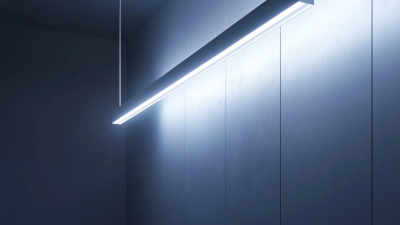
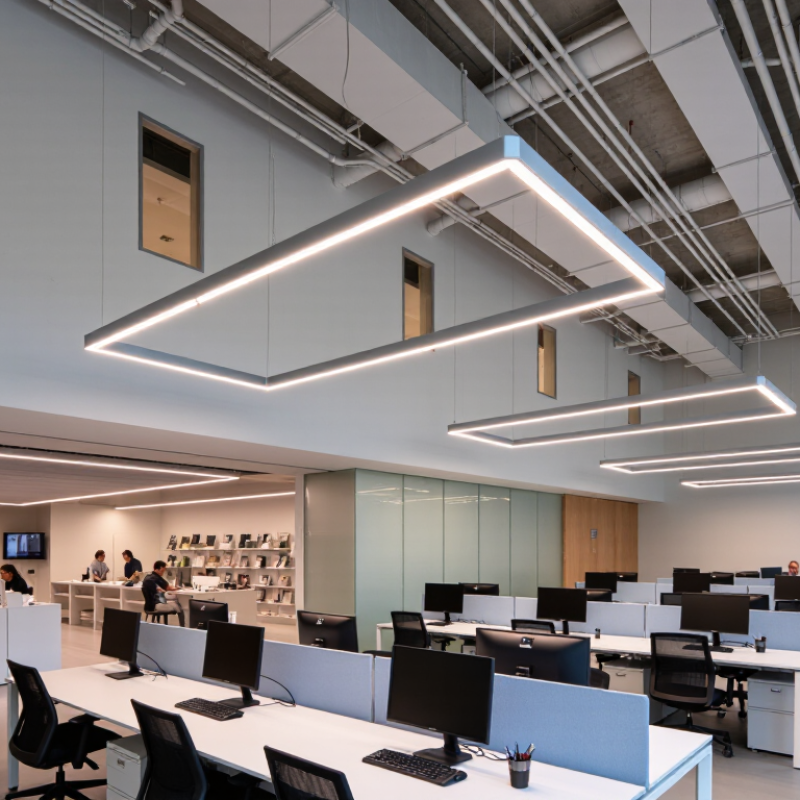
Linear LED lighting can make a long counter, corridor, or workbench feel evenly lit, but the fixture type matters. Surface-mounted bars suit solid ceilings and are easier to access for maintenance. Recessed systems create a cleaner ceiling line, though they need enough space above the ceiling. Suspended fixtures work well over tall counters or open work areas. Check the installation conditions before choosing; a sleek fixture is not useful if it cannot fit.

Size affects both appearance and coverage. Short sections can leave visible gaps, while continuous runs create a more consistent line. Measure the room and note shelves, beams, and work surfaces. Then compare fixture lengths with the layout, rather than guessing from a floor plan. Small alignment errors show.

Light distribution deserves equal attention. Direct lighting sends most light downward, which can help illuminate desks and counters. Direct-indirect options also send light upward, softening the ceiling and reducing a stark look in some spaces. Diffusers can limit harsh points, but they may also change the perceived brightness. I have seen plans look balanced on paper and feel too bright at eye level in person. If possible, review a sample in the actual space, at the intended mounting height. It is an imperfect step, but often a useful one.

Evaluate Energy Efficiency, Brightness, Color, and Controls

Choosing linear LED lighting starts with the work happening beneath it. Compare delivered lumens and efficacy, measured in lumens per watt, rather than wattage alone. The U.S. Department of Energy’s LED Basics reports that LEDs use at least 75% less energy than incandescent lighting. That comparison is useful, but it does not guarantee savings against an existing efficient system. Check actual fixture specifications and estimate annual operating hours.

Brightness should suit the task: a warehouse aisle, checkout counter, and drafting desk need different light levels. The Illuminating Engineering Society’s recommended practices provide application-specific illuminance guidance; avoid treating one target as universal. For color, review correlated color temperature and color rendering index. A neutral 3500–4000 K appearance often works in offices, while product displays may need stronger color fidelity. Test a sample in the real space. It can look different on paper.

Controls affect both comfort and bills. The U.S. Department of Energy’s commercial-building guidance notes that occupancy-sensor savings vary widely by space and use, so avoid assuming a fixed percentage. Pair sensors with daylight dimming near windows, and check that zones match how staff actually move. Ask for flicker and dimming compatibility data, too. Small details matter. I would still question any proposal that promises precise savings without showing operating hours, control settings, and baseline energy use.

How to Choose Linear LED Lighting for Your Business? — Evaluate Energy Efficiency, Brightness, Color, and Controls

Evaluation Dimension What to Check Useful Reference Business Consideration
Energy efficiency Compare luminaire efficacy, measured in lumens per watt (lm/W), and review the complete fixture specification rather than the LED chip alone. Higher lm/W means more light output per unit of electrical power under the stated test conditions. Estimate annual energy use with: input watts × operating hours per year ÷ 1,000. Include expected dimming and occupancy-control savings only when supported by the building’s use patterns.
Brightness and light distribution Check delivered lumens, beam distribution, mounting height, and photometric files. Plan for the required maintained illuminance on the work surface. Illuminance is measured in lux; 1 lux equals 1 lumen per square metre. Recommended levels vary by task and applicable local standards. Use a lighting layout or calculation for the actual room. Avoid selecting a fixture by wattage alone; excessive brightness or poor distribution can cause glare and uneven lighting.
Color temperature Choose correlated color temperature (CCT) to suit the space and its visual tasks. Common options include 3000 K (warm white), 3500–4000 K (neutral white), and 5000 K (cooler white). Use a consistent CCT within connected areas unless the design calls for a deliberate transition. Consider how the light will appear alongside daylight and existing fixtures.
Color rendering Review the color rendering index (CRI) and, where color-critical work is involved, more detailed color-quality data. CRI is rated on a scale up to 100; a higher value generally indicates more faithful color appearance compared with a reference source. Specify an appropriate CRI for merchandise, healthcare, food preparation, or other color-sensitive tasks. Confirm requirements against relevant codes and project specifications.
Dimming and controls Confirm that the driver, dimmer, sensors, and control protocol are compatible. Check the minimum dimming level and whether flicker performance is documented. Available options may include switched, 0–10 V, DALI, or wireless control, depending on the product and system. Match the control system to how rooms are used. Daylight and occupancy controls can reduce energy use when properly designed, commissioned, and maintained.
Service life and maintenance Review rated life, lumen-maintenance data, warranty terms, driver life, and whether components can be replaced. LED life ratings may be expressed as L70 or another lumen-maintenance threshold; actual performance depends on operating conditions. Compare expected maintenance access and replacement costs, particularly in high ceilings or areas where downtime affects operations.
Glare and visual comfort Assess shielding, diffuser design, fixture placement, and reflected glare on screens or glossy work surfaces. Glare depends on the luminaire, viewing angle, room surfaces, and task; a single specification does not guarantee comfort. Review a mock-up or lighting calculation for critical spaces, and position fixtures to suit desks, production lines, and display areas.
Installation and compliance Check dimensions, mounting method, electrical requirements, environmental rating, and applicable safety and building-code approvals. Requirements depend on location, ceiling type, moisture exposure, and local regulations. Verify compatibility with existing wiring and controls before purchase. Consult a qualified lighting professional or electrician where required.
Total cost of ownership Compare purchase and installation costs with projected energy, maintenance, control, and replacement costs over the evaluation period. Results depend on local electricity rates, operating hours, fixture performance, and maintenance assumptions. Use consistent assumptions for each option and document them. Avoid treating estimated savings as guaranteed performance.

Check Installation Methods, Safety Standards, and Maintenance Needs

Choosing linear LED lighting requires more than comparing wattage and color temperature. Installation method affects safety, service time, and operating cost. Surface-mounted fixtures suit concrete ceilings and exposed cable routes. Suspended systems work well above workstations, but their cables need secure anchoring and careful alignment. Recessed products create a clean ceiling line, yet installers must check plenum clearance and heat dissipation. In practice, a quick site survey prevents expensive rewiring. I have seen attractive layouts fail because access panels were ignored.

Safety checks should follow recognized requirements, including IEC 60598 for luminaires and NFPA 70 for electrical installations. Verify voltage compatibility, grounding, ingress protection, and emergency-lighting requirements before purchase. Wet or dusty areas need suitable IP ratings. The International Energy Agency reports that lighting consumes about 15% of global electricity, so efficient design has measurable value (IEA, 2022). However, efficiency claims can mislead when controls, drivers, and installation losses are excluded.

Maintenance planning should include driver access, cleaning intervals, spare-unit storage, and warranty records. The U.S. Department of Energy notes that solid-state lighting performance depends heavily on thermal management and connected controls (DOE, 2023). Dust on lenses can reduce useful light, especially in workshops and warehouses. A six-month inspection may be reasonable, but harsh environments require shorter intervals. Do not assume “maintenance-free” means maintenance-proof. Real buildings are less forgiving.

How to Choose Linear LED Lighting for Your Business?

Compare common installation methods by typical planning considerations. Confirm product-specific requirements and local codes before installation.

Surface-mounted fixtures are often easier to access, while suspended and recessed systems may need more coordination with ceilings and building services. For every method, check electrical ratings, grounding, emergency-lighting requirements, and applicable local safety standards. Plan routine cleaning and inspection according to the manufacturer’s instructions and the environment.

Calculate Total Cost, Lifespan, and Long-Term Value

Choosing linear LED lighting for a business means looking beyond the purchase price. A lower-cost fixture may use more electricity, need earlier replacement, or require extra labor to install. Compare the full cost over a realistic planning period, such as ten years. Include fixture prices, installation, energy use, maintenance, and disposal where relevant.

Estimate energy costs using each fixture’s wattage, daily operating hours, and local electricity rate. For example, a 40-watt fixture used ten hours daily consumes about 146 kilowatt-hours each year. Multiply that figure by your rate, then compare options with similar light output.

Check rated lifespan and warranty details, but treat lifespan as an estimate, not a promise. Heat, dust, switching frequency, and operating conditions can affect performance. Real rooms are messy.

A simple spreadsheet can show when higher initial costs may be offset by lower energy use or fewer replacements. Include dimming controls only if staff will use them consistently; unused features still add cost. Also consider access: a high ceiling may make each replacement expensive, even when the fixture itself is inexpensive. Ask suppliers for photometric data and compatible replacement components. Then verify the proposed layout in the actual space, since a paper calculation cannot reveal glare on a monitor or shadows across a workbench. The answer may be less tidy than expected. That is worth noticing.