
China Best Light Panels for Global Buyers?
China has become a major sourcing center for Light Panels used in offices, studios, retail spaces, hospitals, and homes. Its manufacturers offer broad choices, from slim edge-lit panels to high-output modular systems. However, “best” depends on the buyer’s application, budget, standards, and after-sales expectations.
In my experience reviewing lighting products, small details often determine long-term value. A panel may look bright in a showroom but perform poorly after months of heat exposure. Buyers should examine measured lumen output, color rendering, flicker performance, power efficiency, driver quality, and thermal management. Independent test reports matter. So do factory audits, sample testing, and clear warranty terms.
Dr. Mariana Figueiro, a respected lighting researcher, has stated, “Light is the strongest synchronizer of the circadian system.” This reminder makes product selection more meaningful. Light Panels are not merely flat ceiling fixtures; their color temperature, glare control, and operating schedule can influence comfort and visual performance. For global buyers, reputable Chinese suppliers should provide transparent technical data, stable production records, and documentation suitable for the destination market.
Still, no supplier is perfect. Samples can differ from mass production. Specifications may also require careful verification. Buyers should compare several factories, inspect packaging, test dimming systems, and confirm electrical compatibility before placing large orders. A lower price can be attractive. It is not always the lower total cost. Reliable sourcing combines engineering evidence, communication, and a willingness to question attractive claims.
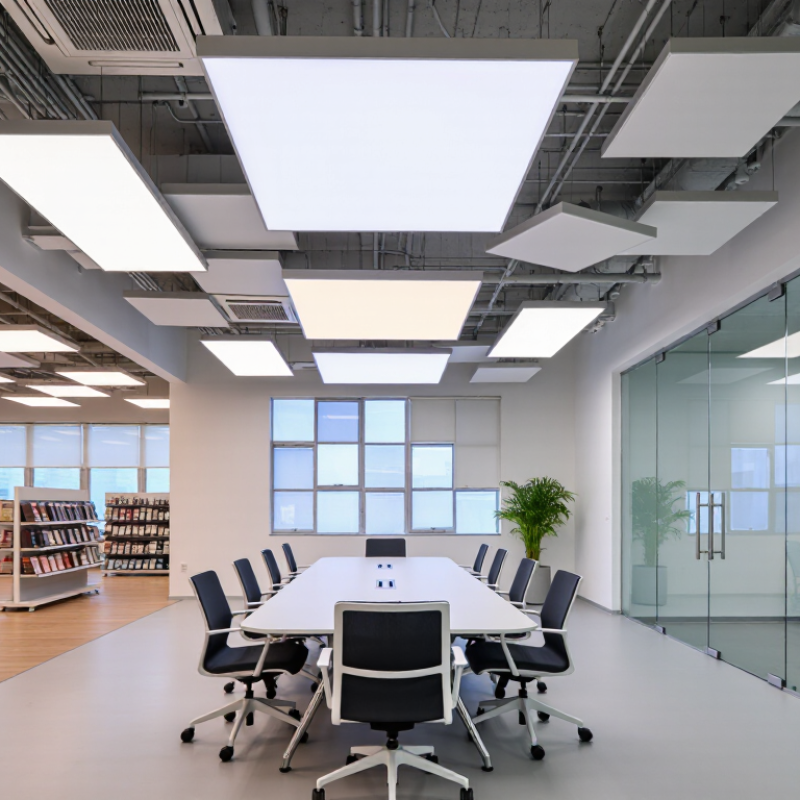
What Makes China a Leading Source of Light Panels?
China Best Light Panels for Global Buyers?
What Makes China a Leading Source of Light Panels?
China has become a leading source of light panels for global buyers. The reason is not simply lower pricing. Manufacturers often combine LED engineering, optical testing, metal fabrication, and assembly within one supply network. This structure can shorten development cycles and support customized sizes, color temperatures, dimming systems, and mounting options. From project experience, buyers can request samples, compare beam uniformity, and review test reports before placing volume orders. That evidence matters. Reliable suppliers explain lumen output, color rendering, heat management, power input, and service life clearly. Still, specifications may vary between samples and mass production. That weakness deserves attention.
Tips: Ask for a sample under real installation conditions, not only studio photographs. Check flicker performance, surface brightness, frame strength, packaging, and replacement procedures. Request production photos and a documented inspection plan. Independent testing can expose uneven lighting or thermal problems that brochures miss. Keep every requirement in writing.
China’s advantage also comes from manufacturing flexibility. Factories can adjust panel dimensions, diffuser materials, connectors, and control protocols for different commercial spaces. Experienced technical teams may suggest practical changes when a design looks attractive but proves difficult to produce. However, communication remains a real risk. A low quote may exclude testing, tooling, export packaging, or after-sales support. Buyers should verify certifications required in the destination market and confirm who handles technical claims. Do not trust polished documents alone. Site feedback is valuable. One project may reveal a problem that a laboratory sample never showed.
Key Types of Light Panels Available from Chinese Manufacturers
China Best Light Panels for Global Buyers?
Chinese manufacturers offer several light panel types for different production and lighting needs. Edge-lit LED panels use side-mounted diodes and light guides for a slim, even profile. They suit offices, retail ceilings, and compact installations. Back-lit panels place LEDs behind the diffuser, often producing stronger output and better uniformity. They usually need more depth, but their structure can be easier to service.
For photography and video, bi-color panels allow adjustable color temperatures, while RGB or RGBW panels create colored backgrounds and visual effects. Soft panels provide gentler shadows for interviews and product shoots. Check output at the distance you will use, not only the advertised wattage. Request test reports, flicker measurements, color-rendering data, dimming performance, and samples before placing a large order. I once selected a bright panel that looked impressive in a showroom, but its fan noise disrupted recordings. That mistake changed my inspection checklist.
Tips: Confirm voltage, plug type, mounting hardware, warranty terms, and packaging strength. Ask whether replacement drivers and diffusers are available. Review factory quality records and production photos, but do not treat documents as proof alone. A video test under your camera can reveal flicker quickly. Also check heat management after one hour of operation. Some specifications remain unclear, and buyers should question them rather than assume they are accurate.
How to Evaluate Light Panel Quality, Features, and Performance
China Best Light Panels for Global Buyers?
How to Evaluate Light Panel Quality, Features, and Performance
Choosing light panels from China requires more than comparing prices. In practical evaluations, inspect the diffuser, frame, LEDs, and power connections before testing brightness. A rigid aluminum frame should resist twisting during handling. The diffuser should spread light evenly, without bright dots near the edges. Small details matter. Ask for LM-80 or similar LED test evidence, measured at a stated temperature.
Performance needs repeatable measurements. Check illuminance at several distances, color temperature stability, CRI, flicker, and heat rise after two hours. A panel may look bright for ten minutes, then dim as heat builds. Request an integrating-sphere report and a clear tolerance range. Dimming should remain smooth at low output. Wireless controls help, but only when pairing stays reliable in a crowded workspace. Some specifications sound impressive yet remain difficult to verify.
For global buyers, confirm input voltage, plug options, packaging strength, and documentation before ordering. Test one sample through cold starts, repeated dimming, and overnight operation. Listen for fan noise, if a fan is fitted. I once treated a high CRI number as sufficient; it was not. Skin tones still looked slightly green under mixed lighting. That mistake changed my checklist. Ask how measurements were made, not only which numbers appear. Factory audits and independent reports add confidence, but neither replaces a hands-on sample. Real performance can differ between batches.
Top Selection Criteria for Global Buyers
China Best Light Panels for Global Buyers?
Top Selection Criteria for Global Buyers
Choosing light panels from China requires more than comparing prices. Start with the intended use: studio interviews, product photography, livestreaming, or outdoor work. Check brightness at a stated distance, not only the maximum lumen figure. A panel producing stable light at one meter is easier to evaluate. Color accuracy matters too. Look for measured CRI and TLCI results, especially for skin tones and retail products. A CRI value above 95 is useful, but test data should identify the measurement method.
Flicker performance deserves careful attention. Ask for results at different dimming levels and frame rates. A panel may appear steady to the eye but show banding on a camera. Test a sample with your own camera, meter, and power supply. Small details matter. Inspect the diffuser, yoke, knobs, cooling fan, and cable connections. Passive cooling is quieter, but it may increase heat around the LEDs. Active cooling manages heat better, although fan noise can become irritating during interviews.
Global buyers should also verify electrical compatibility, destination-market certifications, labeling, manuals, warranty terms, and replacement-part availability. Confirm carton strength with a drop-test video or a sample shipment. Ask whether the supplier can provide consistent batches, not merely one impressive sample. I have seen specifications change after the first order. That risk is easy to underestimate. A written inspection plan, clear tolerance limits, and pre-shipment testing can expose uneven color, loose controls, or missing adapters before the goods leave China.
China Best Light Panels for Global Buyers? - Top Selection Criteria for Global Buyers
| Selection Criterion | Recommended Benchmark | Why It Matters to Global Buyers | Key Verification Method | Priority |
|---|---|---|---|---|
| Light Output | At least 3,000 lux at 1 metre for general video lighting; confirm the measured value rather than relying only on marketing claims. | Higher and more consistent illumination supports interviews, product photography, livestreaming and studio production. | Request a photometric test report showing illuminance, test distance, beam angle and measurement conditions. | High |
| Color Rendering | CRI (Ra) of 95 or higher; use TLCI or TM-30 data when accurate camera color reproduction is important. | High color fidelity reduces skin-tone errors and improves the appearance of products, fabrics and artwork. | Check independent test data for CRI, R9 and, where available, TLCI or TM-30 fidelity and gamut values. | High |
| Color Temperature Range | A genuinely adjustable range of approximately 2,700K–6,500K is suitable for many indoor and mixed-light applications. | Adjustable white balance helps the panel match daylight, tungsten lighting and existing fixtures. | Test the minimum and maximum color-temperature settings with a calibrated color meter. | High |
| Color Accuracy Across the Range | The supplier should provide color-quality data at multiple CCT settings, not only at one nominal setting. | Some panels perform well at one color temperature but show green or magenta shifts at other settings. | Request test results at warm, neutral and daylight settings, including chromaticity and color-rendering values. | High |
| Flicker Performance | Prefer flicker-free operation across the full dimming range and intended camera shutter speeds. | Flicker can create visible bands, exposure variation and post-production problems in video footage. | Conduct a high-speed-camera test and request measurements using a recognized flicker metric or waveform analysis. | High |
| Dimming Control | Smooth 0–100% dimming without abrupt jumps, visible color shifts or unstable output. | Precise brightness control is essential for exposure matching and repeatable studio setups. | Test dimming in small increments and compare output and color temperature at low, medium and full power. | High |
| Thermal Management | The housing should remain stable during extended operation, with adequate heat sinking and no recurring thermal shutdown. | Effective heat control improves LED life, color consistency and operational safety. | Run the panel at full power for several hours and inspect temperature, output stability and automatic protection behavior. | High |
| Power Efficiency | Compare illuminance per watt, not wattage alone; request power consumption at different brightness levels. | Efficient fixtures reduce electricity use, battery drain and heat generation during long production sessions. | Measure actual input power and illuminance under identical distance and beam-angle conditions. | Medium |
| AC and DC Operation | For mobile production, consider mains operation plus a clearly specified battery system and runtime. | Dual-power capability supports studios, location work, events and markets with unreliable power access. | Confirm input voltage, connector type, battery compatibility, charger specifications and runtime at full output. | Medium |
| Electrical Safety Compliance | Select the certification package required by the destination market, such as CE, UKCA, FCC or UL-related requirements where applicable. | Correct compliance documentation reduces customs, insurance, installation and marketplace risks. | Verify certificate numbers, test reports, product markings and whether documents cover the exact model and power supply. | High |
| Ingress Protection | IP20 is generally intended for dry indoor use; choose a higher IP rating when dust or moisture exposure is expected. | The correct protection level helps prevent premature failure in workshops, outdoor productions and humid environments. | Check the official IP test report and confirm that the rating applies to the complete assembled product. | Medium |
| Build Quality and Mounting | Look for rigid housing, secure yokes or brackets, standard mounting threads and a stable diffuser or lens. | Reliable mechanical construction lowers damage risk during transport and frequent repositioning. | Inspect samples, mounting points, cable strain relief, fasteners, diffuser retention and compatibility with standard accessories. | High |
| Control Options | Useful options may include onboard controls, wired DMX, wireless control or app control, depending on the workflow. | Control compatibility determines how easily the light integrates with existing studio and event systems. | Test communication range, channel stability, firmware behavior and compatibility with the buyer’s control equipment. | Medium |
| Warranty and Service | Require written warranty terms, spare-parts availability and a defined response process for technical issues. | After-sales support affects the total cost of ownership more than the initial purchase price alone. | Review warranty exclusions, claim procedures, repair locations, replacement-part lead times and technical documentation. | High |
| Packaging and Export Readiness | Packaging should protect LEDs, controls, power supplies and diffusers against vibration, impact and moisture. | International shipments involve longer transit distances and multiple handling points. | Request packaging specifications, carton dimensions, drop-test information and export documents before ordering. | Medium |
| Total Landed Cost | Evaluate unit price together with freight, duties, taxes, accessories, replacement parts and warranty costs. | The lowest factory price may not produce the lowest delivered or operating cost. | Prepare a landed-cost sheet using the destination country’s tariff classification, shipping terms and applicable taxes. | High |
Buyer note: Specifications should be compared under the same measurement conditions. Ask for model-specific test reports and validate critical performance with a pre-production sample before placing a bulk order.
How to Choose a Reliable Chinese Light Panel Supplier
China Best Light Panels for Global Buyers?
How to Choose a Reliable Chinese Light Panel Supplier
In my sourcing experience, a dependable light panel supplier proves performance before discussing price. Request samples with measured brightness, color temperature, CRI, flicker, and power consumption. A clear test report should identify the instrument, test date, and product batch. Vague figures deserve more questions.
Ask for factory photos, production capacity, quality procedures, and traceable component records. A serious supplier can explain LED binning, diffuser materials, heat management, and driver protection in practical terms. Request a small pilot order. Check whether the delivered panels match the approved sample, including frame finish, cable length, labels, and packaging strength.
Do not ignore communication.
Confirm response times, inspection arrangements, warranty terms, spare parts, and replacement procedures in writing. Export experience matters, but it does not guarantee consistent quality. I once accepted an attractive quotation after checking only the sample. The bulk shipment had uneven brightness and weaker cartons. That mistake changed my process: independent inspection and drop testing now happen before final payment.
Ask how the supplier handles failed units. Reliable answers include photographs, serial records, root-cause analysis, and a defined corrective timeline. Verify applicable electrical and environmental documentation for your destination market. Certificates alone are not enough. They must match the exact model and production site. A supplier that welcomes difficult questions is usually easier to trust than one offering perfect promises.
Related Posts
-
Why Panel LED Technology Revolutionizes Energy Efficiency in Modern Lighting Solutions
-
Essential Tips for Choosing the Best Led Panel for Your Space
-
7 Compelling Reasons to Choose the Best Light Panels for Your Business Needs
-
The Ultimate Guide to Choosing the Best Light Panels for Your Space
-

How to Choose the Best Light Panels for Your Space?
-
Best Light Panels for Perfect Lighting Solutions Worldwide?
