
What Is the Best Dense Load FIBC for 2026?
Choosing the best Dense Load FIBC for 2026 requires more than comparing prices or advertised capacity. These flexible intermediate bulk containers must handle heavy, compact materials without losing stability during filling, storage, or discharge. A reliable selection begins with the product itself. Density, particle size, moisture, temperature, and flow behavior all influence the bag’s performance.
A practical evaluation should examine fabric strength, lifting loops, seams, base construction, and safe working load. Check the safety factor and confirm that testing supports the stated rating. The bag must also match the filling equipment and warehouse layout. For example, a narrow bag may fit a confined pallet position, while a wider design can reduce stacking pressure. Small details matter.
Inspect the liner.
Consider discharge control.
Do not ignore handling conditions.
Experienced operators often notice problems before specifications reveal them. A bag that performs well with dry powder may struggle with damp, abrasive, or unevenly loaded material. Dust control, grounding, and operator training may also affect the final choice. These factors should be reviewed with qualified suppliers and documented clearly.
Still, no single design is best for every application. A brochure may look convincing, yet real performance can differ after repeated handling. Trial filling, drop testing, and warehouse observation can expose weaknesses early. That process may feel slower, but it protects products, equipment, and people. The strongest 2026 choice will balance engineering evidence, field experience, supplier reliability, and the actual demands of your operation. Mistakes remain possible. Careful review reduces them.
What Defines a Dense Load FIBC in 2026
What Is the Best Dense Load FIBC for 2026?
What Defines a Dense Load FIBC in 2026
A dense load FIBC is designed for heavy materials packed into a limited volume. Its performance depends on more than fabric strength. The bag must balance safe working load, filling height, discharge control, and handling stability.
In 2026, reliable designs use high-tenacity woven polypropylene, reinforced seams, and carefully tested lifting loops. A stable base helps the bag remain upright on pallets or warehouse floors. That detail matters. Engineers should also check the bag’s safety factor, not only its advertised capacity.
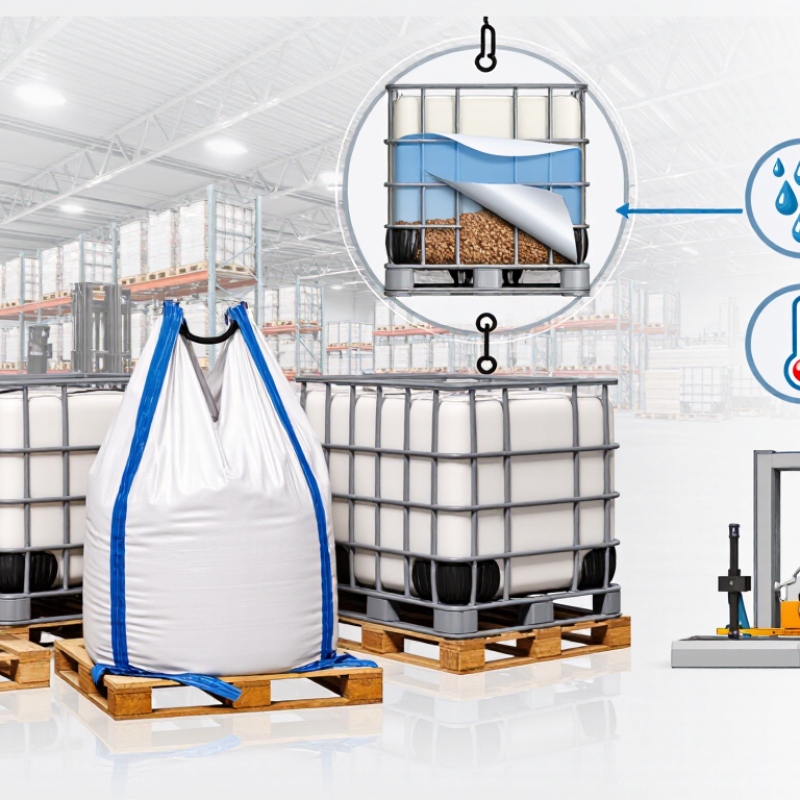
Dense products can create intense pressure near the bottom panel. Fine powders may shift during transport, while damp materials can increase weight unexpectedly. A suitable liner may reduce moisture exposure and prevent product loss. However, an unsuitable liner can trap condensation. This issue deserves more attention.
Clear identification supports safer operations. Each bag should show its rated load, handling instructions, production batch, and inspection status. These details help connect warehouse records with actual equipment.
Automated filling also requires accurate inlet dimensions and controlled airflow. Otherwise, dust, uneven filling, or sudden settling may affect stability.
Practical testing should reflect real conditions. Samples can be lifted, stacked, transported, and stored under changing humidity. A bag that performs well in a laboratory may behave differently after rough handling. That is an uncomfortable point, but it matters.
The best dense load FIBC is not simply the strongest option; it is the one whose design matches the material, equipment, and daily risks.
Key Materials and Construction Features
What Is the Best Dense Load FIBC for 2026?
Key Materials and Construction Features
The best dense load FIBC begins with the right polypropylene fabric. High-tenacity woven polypropylene supports heavy mineral powders, pellets, grains, and construction materials without unnecessary bulk. Fabric weight should match the product’s density, filling method, and expected handling conditions.
Construction details often decide performance. Reinforced lifting loops help distribute weight during crane or forklift movement. Cross-corner loops can improve stability when bags are stacked. Strong, double-stitched seams reduce the risk of panel separation. A coated fabric may improve moisture resistance, while an internal liner can protect fine powders from humidity and contamination. However, liners can complicate filling and emptying. That trade-off deserves attention.
Small details matter.
Tips: Check the safe working load, safety factor, seam design, and lifting configuration before ordering. Request test evidence for drop, top-lift, and stacking performance. Inspect the bag after filling, especially around corners and discharge spouts. Dense products may shift during transport, so a stable base and controlled filling speed are valuable. In practical use, even a well-designed FIBC can perform poorly when overloaded or dragged across rough floors. There is no perfect construction for every application. A bag selected only by price may create higher handling costs later. Review real operating conditions with a qualified packaging engineer.
Load Capacity, Stability, and Safety Requirements
What Is the Best Dense Load FIBC for 2026?
Load Capacity, Stability, and Safety Requirements
The best dense load FIBC starts with the product’s actual bulk density, not a guessed weight. A compact powder can create severe pressure at the bag’s lower seams. Specify the safe working load with a clear safety factor and realistic filling conditions. Do not select capacity by volume alone. A 1,000-liter bag may carry far less than expected when the material is dense. Confirm the filling height, discharge design, lifting loops, and pallet footprint before ordering.
Stability matters during handling and storage. A square construction can reduce bulging and improve stacking, but only when filled evenly. Test the bag with the real material, including moisture and flow differences. Check seam strength, liner fit, and loop alignment. Static-control features may be necessary for sensitive environments. Use applicable handling standards, inspection records, and traceability documents. Small design details often decide whether a load stays upright.
Tips: Keep bags centered on sound pallets. Avoid dragging them across rough floors. Inspect every loop before lifting. Never exceed the marked safe working load. A perfect specification on paper can still fail in practice. One useful improvement is recording test results from each production batch. This step takes time, but it exposes weak assumptions. Also review stacking limits after transport, because vibration can change the load shape. Safety is not only the bag’s rating; it includes equipment, operators, storage conditions, and disciplined procedures.
Testing Standards and Regulatory Considerations
What Is the Best Dense Load FIBC for 2026? Testing Standards and Regulatory Considerations
The best dense-load FIBC begins with verified performance, not a thicker-looking fabric. ISO 21898:2004 covers FIBCs for non-dangerous goods, including lifting, stacking, drop, and seam-strength tests. A qualified laboratory should test filled bags, not only fabric samples. During inspection, look for stretched lifting loops, powder leakage, and distorted base seams. Small details matter.
Electrostatic control also deserves attention. IEC 61340-4-4 evaluates electrostatic risks in FIBC handling, especially during filling and discharge. The correct construction depends on the material, humidity, grounding method, and filling speed. One specification cannot fit every plant. That assumption is often missed. For food-contact applications, material declarations and migration testing should align with applicable rules, such as EU Regulation 1935/2004 and relevant plastic-material requirements. Documentation must identify resin grades, additives, production controls, and test dates.
Market pressure is increasing. The UNEP Global Waste Management Outlook 2024 projects municipal waste could rise from 2.3 billion tonnes in 2023 to 3.8 billion tonnes by 2050. This strengthens the case for reusable designs, but reuse claims require evidence. Inspectors should record cleaning, storage, UV exposure, and previous load history. The Ellen MacArthur Foundation’s New Plastics Economy reports also emphasize traceability and circular design. Yet recycled content is not automatically safer or stronger. Testing should confirm it. A practical selection file should include the safe working load, safety factor, test reports, closure drawings, and a clear replacement schedule.
What Is the Best Dense Load FIBC for 2026? - Testing Standards and Regulatory Considerations
| Evaluation Dimension | Recommended Requirement for a Dense-Load FIBC | Relevant Standard or Regulation | Why It Matters in 2026 | Verification Evidence |
|---|---|---|---|---|
| Rated Safe Working Load | Select a certified SWL that exceeds the actual filled mass, including product-density variation, filling errors and handling forces. Common industrial ratings are 500 kg, 1,000 kg, 1,250 kg and 1,500 kg; the correct value depends on the application. | ISO 21898:2004; applicable national and customer specifications | Dense materials can reach the rated mass before the container is completely full, increasing stress on seams, lifting loops and the bottom panel. | Design specification, production test report and visible SWL marking |
| Safety Factor | Use the safety factor required by the selected FIBC design and intended handling method. A 5:1 design is widely used for single-trip FIBCs, while reusable designs commonly require a higher documented factor, such as 6:1. | ISO 21898:2004; purchaser and transport requirements | The safety factor is not a substitute for a suitable SWL; it must be supported by the relevant lifting and durability tests. | Type-test certificate identifying SWL, safety factor and intended reuse status |
| Fabric and Seam Strength | Use woven polypropylene fabric and seams engineered for the specified SWL, abrasion exposure, filling method and discharge configuration. Seam efficiency should be demonstrated by testing rather than assumed from fabric breaking strength. | ISO 21898:2004; ISO 13934-1 or equivalent textile-strength method where specified | Dense powders and granules can create high localized loads at corners, baffles, loops and discharge spouts. | Fabric tensile results, seam-strength results and construction drawings |
| Top-Lift Test | The filled FIBC should be lifted using its specified loops or lifting arrangement at the declared SWL without rupture, dangerous deformation or loss of contents. | ISO 21898:2004 | Improper fork spacing, uneven lifting or a concentrated load can damage loops and upper seams even when the fabric appears intact. | Recorded top-lift test load, duration, lift configuration and result |
| Bottom-Lift and Fork Handling | If the FIBC is intended for fork-lift handling, specify tunnel dimensions, fork-entry direction and any bottom-lift method. Forks should support the designed load without cutting or excessive point loading. | ISO 21898:2004; site handling procedures | A high-density load produces greater bending and puncture forces when a bag is lifted from an unsuitable position. | Handling test record, fork-tunnel specification and operating instructions |
| Drop Test | Test the filled container at the declared SWL using the applicable drop-test procedure and product condition. The FIBC should not rupture or release its contents in a hazardous manner. | ISO 21898:2004; UN Manual of Tests and Criteria for dangerous goods where applicable | Dense contents create high impact energy during accidental drops and may expose weak seams or corners. | Drop height, temperature, fill mass, number of drops and observed damage |
| Stacking Stability | Use a stable construction with an appropriate shape, controlled filling level and defined stacking height. Baffle construction can improve shape retention but does not automatically increase the SWL. | ISO 21898:2004; warehouse and transport requirements | High-density loads increase the compressive force transmitted to lower bags and can increase the risk of leaning or collapse. | Stacking test results, maximum stack height and storage instructions |
| Tear and Propagation Resistance | Specify sufficient resistance to initial tearing and tear propagation for the expected abrasion, sharp edges and handling conditions. Protective liners do not replace the need for adequate outer-fabric strength. | ISO 21898:2004; applicable textile test methods | A small cut can rapidly enlarge when the container is filled with a heavy, compact material. | Tear-strength report, abrasion assessment and visual inspection criteria |
| Electrostatic Classification | Choose Type A, B, C or D according to product properties, dust-explosion risk, grounding controls and the surrounding hazardous area. Type C FIBCs require effective grounding during filling and discharge. | IEC 61340-4-4:2018; applicable explosion-protection rules | Many dense powders generate electrostatic charge during filling, conveying and discharge; ignition controls must be assessed as a complete system. | FIBC electrostatic type, resistance test, grounding instructions and user training record |
| UN Dangerous-Goods Approval | For dangerous goods, use the correct UN FIBC design code, packaging group, filling ratio and closure arrangement. A standard industrial FIBC must not be treated as UN-approved unless the specific design has passed the required tests and bears the correct marking. | UN Recommendations on the Transport of Dangerous Goods, Model Regulations, Chapter 6.5; applicable modal regulations | Regulatory obligations vary by transport mode and destination, and approval is design-specific rather than transferable to every similar-looking bag. | UN test certificate, authorized marking and transport documentation |
| Food and Pharmaceutical Contact | Where the contents are food, feed or pharmaceutical materials, control raw-material specifications, migration risk, cleanliness, traceability and hygiene. Use a suitable liner when the product requires a higher barrier or contamination control. | Applicable food-contact legislation in the destination market, such as EU Framework Regulation (EC) No 1935/2004 and GMP Regulation (EC) No 2023/2006 where applicable | Heavy loads can increase liner stress, seal strain and the consequences of contamination or leakage. | Declaration of compliance, hygiene controls, batch traceability and cleanliness inspection |
| Moisture and Product Compatibility | Use coated fabric, an inner liner or a moisture barrier only when justified by the product and environment. Confirm compatibility with oils, solvents, acids, alkalis, heat and ultraviolet exposure. | ISO 21898:2004; chemical compatibility and customer-specific validation | Moisture uptake, caking or chemical attack can alter bulk density and load distribution while weakening the packaging. | Compatibility assessment, liner specification and environmental exposure test |
| Traceability and Marking | Mark the FIBC with essential information such as SWL, safety factor or reuse status, handling instructions, production identification and any required regulatory marking. | ISO 21898:2004; UN Model Regulations Chapter 6.5 where applicable | Clear identification prevents overloading, incorrect reuse and confusion between electrically different or chemically incompatible designs. | Label artwork, batch records, inspection logs and certificate linkage |
| Reuse and Inspection | Treat a single-trip FIBC as non-reusable. Reusable FIBCs require a documented inspection program covering fabric, seams, loops, discharge points, contamination, UV exposure and electrostatic performance. | ISO 21898:2004; site safety procedures and applicable transport rules | Repeated dense loading and unloading can cause fatigue and abrasion that may not be visible during a quick visual check. | Reuse classification, inspection checklist, rejection criteria and service history |
Note: Test values and regulatory obligations must be confirmed against the latest edition of the applicable standard, the transported material, the destination market and the selected transport mode. SWL examples are engineering reference values, not universal legal limits.
How to Select the Right Dense Load FIBC for Each Application
What Is the Best Dense Load FIBC for 2026?
Selecting the right dense load FIBC starts with the material, not the bag’s appearance. Record the product’s bulk density, particle size, moisture level, and flow behavior. A fine powder may need a coated fabric and sift-proof seams. Damp material may require a suitable liner. Granular products often need stronger discharge control.
Check the required safe working load and stacking conditions. A bag carrying 1,000 kilograms may face greater stress during lifting, transport, and warehouse storage. Select reinforced lifting loops that match the handling equipment. Confirm the bag’s safety factor through documented testing. Ask for fabric strength, seam performance, and drop-test records. Reliable suppliers should explain these results clearly.
Application details matter. A filling spout can reduce dust and improve loading accuracy. A bottom discharge spout can shorten unloading time. Static-sensitive environments may require conductive or antistatic construction, reviewed by a qualified specialist. Outdoor storage also changes the decision; sunlight, rain, and temperature swings can weaken unsuitable fabric.
Do not choose by price alone. The cheapest option can create handling problems later. A field trial with real material is often more useful than a perfect brochure. Test one filled bag, inspect its seams, and measure discharge time. No method is flawless. Product behavior can change between seasons, batches, and filling machines. Recheck the specification when the application changes.
